



In the heart of Beirut, behind the quiet face of a homemaker and mother of seven, lived one of Israel’s most daring spies. Shulamit Cohen-Kishik led a double life that blended domestic grace with astonishing courage. Known simply as “The Pearl,” her actions saved thousands of lives, shaped the course of Jewish history, and stood as a testament to the quiet heroism often hidden in plain sight.
Shulamit was born in 1917 in Buenos Aires, Argentina, and immigrated with her family to Jerusalem in 1924 when their business began to fail. At just 16, she married Yosef Cohen-Kishik, a fabric merchant from a respected Lebanese Jewish family who had come to Israel searching for a bride from the Holy City. The couple moved to Beirut in 1936, where Shulamit quickly became part of both the Jewish elite and Christian Phalangist social circles. Her life seemed to follow a traditional path—she was described as a model housewife who knitted, embroidered, cooked, and lovingly raised seven children: Yaffa, Avraham (Berti), Meir, Arlette, Itzhak, Carmela, and David.
But behind her calm and capable exterior, Shulamit was leading a second, secret life. As tension grew in the region, she overheard a conversation at a social event between Arab leaders discussing a coordinated attack on the soon-to-be-established Jewish state. Shulamit felt an immediate and powerful need to act. Unable to send mail or messages openly, she crafted a letter using invisible ink and managed to smuggle it across the border to Haganah headquarters in Metula. Her bravery caught the attention of Shai, the pre-state Jewish intelligence agency, and in 1947—before Israel’s founding—she began her journey as a spy.
For the next fourteen years, Shulamit carried out covert operations, feeding Israel with high-level political and military intelligence. Her fluent Arabic, graceful demeanor, and strong relationships with Lebanese officials made her an ideal operative. She helped thousands of Jews escape hostile Arab nations through a vast smuggling network, using cover stories and complicated travel routes. Her home became a haven for frightened families fleeing from Syria, Iraq, and other countries. She coordinated their transfers through Tyre, Sidon, or Metula, depending on border conditions. Every time one group made it to safety, another would arrive, and she would spring back into action with barely a moment to rest.

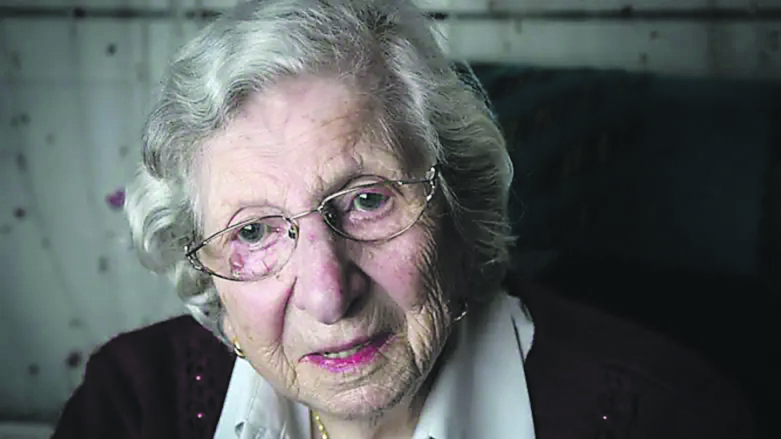

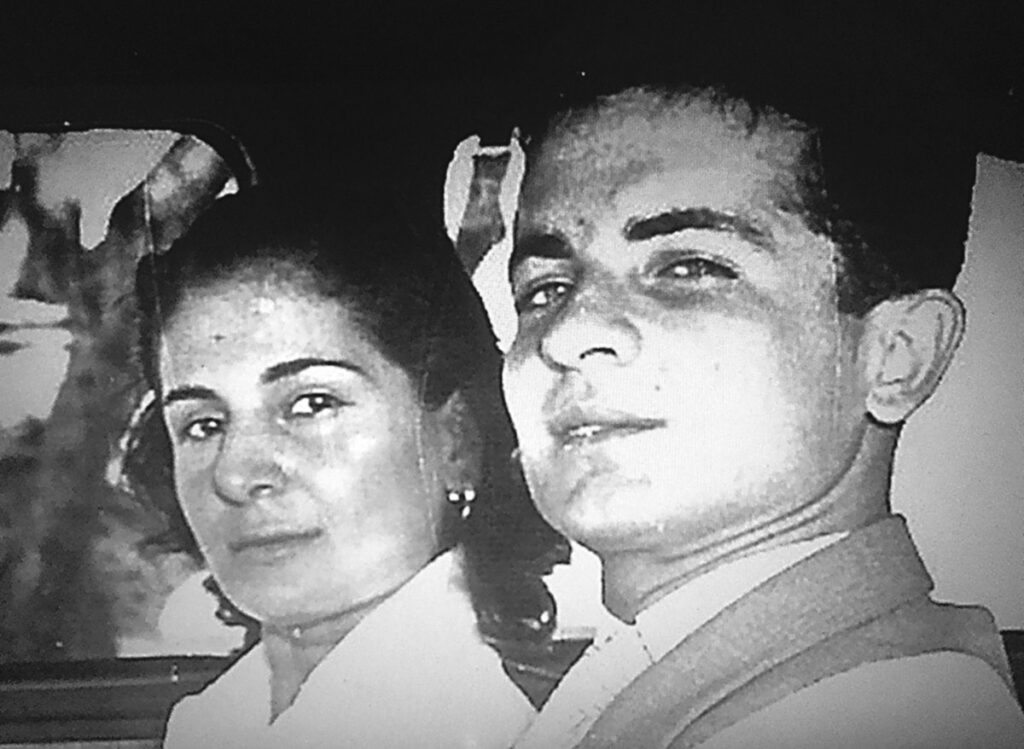
Her ingenuity and boldness were legendary. During one operation, Shulamit was helping dozens of Jewish children prepare to escape when she noticed Russian and Arab agents monitoring the area. Thinking quickly, she dashed to a nearby shop and bought every candle in stock. Handing them out to the children, she led them through the streets in a fake Hanukkah parade—singing traditional songs and waving candles. The agents, convinced it was merely a holiday celebration, lost interest and left. The moment they were gone, she loaded the children onto waiting buses and smuggled them safely to Israel. It was this type of quick thinking that made her one of Israel’s most valuable operatives.
Shulamit’s devotion wasn’t just professional—it was deeply personal. She sent her two eldest sons to Israel for safety in 1949, and later her daughter, Yaffa, during Lebanon’s civil unrest. Eventually, only four of her children remained with her in Beirut. Even then, her work continued undeterred. Each time she crossed into Israel for a mission, she stopped in Tiberias to pray at the grave of Rabbi Meir Baal HaNes, placing coins in a tzedakah box and whispering prayers for protection.
In 1961, a critical mistake nearly cost her everything. While returning from Israel through Turkey, her passport was accidentally stamped with an Israeli seal—something that could not be explained away. After a brief delay in Europe, she returned to Beirut and was immediately arrested. With irrefutable proof of her espionage, the authorities sentenced her to death. On appeal, her sentence was reduced to twenty years, but her time in prison was nightmarish. She endured six years of torture, including the pulling of fingernails, beatings, electrocution, and the loss of sight in one eye. Guards mocked her by comparing her to Eli Cohen, another famous spy who had been executed.
Despite this, Shulamit never gave up hope. She prayed constantly, fasted twice a week, and recited Psalms from memory. She told herself that if she had been captured while saving thousands of Jewish lives, then her suffering had meaning. She believed that her fate rested in G-d’s hands—and that one day she would be reunited with her children.
That day came in 1967, following Israel’s victory in the Six-Day War. In a sudden and dramatic prisoner exchange, she and her family were airlifted to Israel via Cyprus. At last, she was free. Though her body had been broken, her spirit remained strong. She lived the rest of her life quietly, volunteering, speaking, and inspiring generations with her story. She never sought fame, yet her bravery and humility earned her the deep respect of the nation.
Shulamit Cohen-Kishik passed away in 2017 at the age of 100. She left behind a large family, including grandchildren and great-grandchildren who carry forward her legacy. Through every moment of fear and courage, she stayed true to her mission. She wasn’t just a spy—she was a mother, a protector, and a fierce believer in the power of one person to make a difference.


