



You Don’t Need to Make Up for What You Ate
Laura Shammah, MS, RDN
The holidays are supposed to be a time of celebration, family, tradition and connection. Yet for many people, they also bring something else, food guilt.

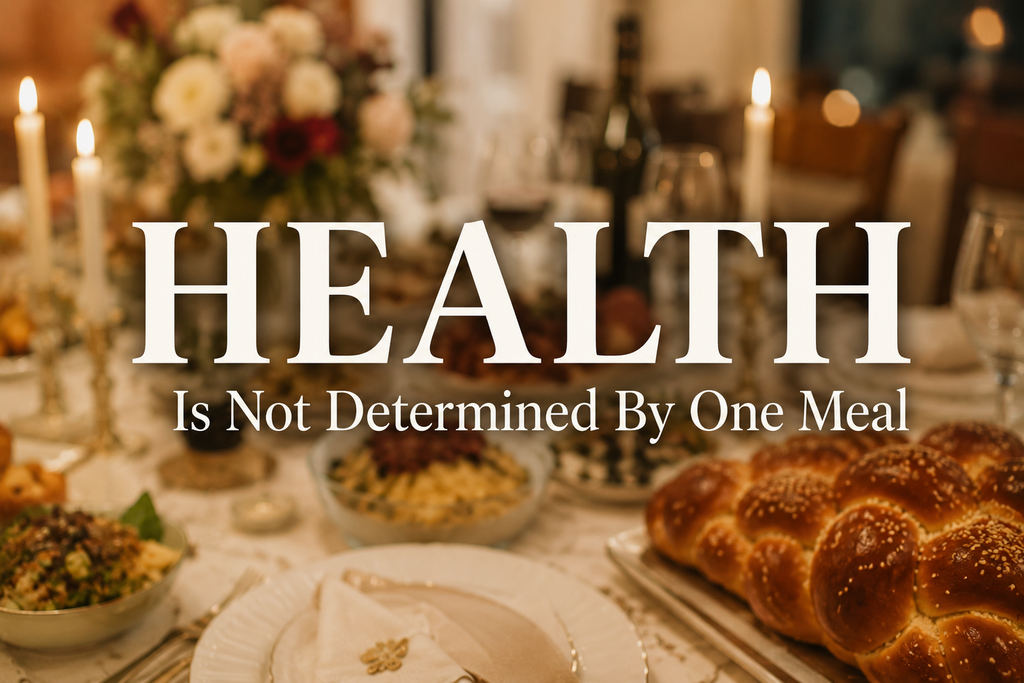
After several large meals, desserts, challah and a schedule that looks nothing like your normal routine, it is easy to wake up thinking, “I ate way too much. I need to be good today.” So you skip breakfast. You promise yourself no carbohydrates. You decide you need an extra-long workout. You step on the scale and immediately regret it. But what if the healthiest thing you could do after eating more than usual was simply go back to eating normally?
As a dietitian who specializes in eating disorders and helping people develop a healthier relationship with food, I see this pattern all the time. The problem usually isn’t the holiday meal itself. It’s what happens afterward. We overeat, feel guilty, restrict to compensate, become overly hungry, eat more than we intended again and then feel even more guilty. That is how the restrict-overeat cycle begins.
One meal, one day or even several days of eating differently do not undo your health. Your body is much more adaptable than we give it credit for. You may feel bloated after the holidays. Your clothes may feel tighter. The number on the scale may even be higher. That doesn’t mean you’ve suddenly gained several pounds of body fat. Restaurant meals, salty foods, carbohydrates, desserts, changes in digestion and simply having more food in your system can all temporarily affect your weight and how your body feels.
You don’t need to punish your body for celebrating. Instead of asking, “How can I undo what I ate?” ask, “What does my body need today?” Usually, the answer is surprisingly simple. Eat breakfast. Drink water. Have balanced meals. Include vegetables, protein, fat and carbohydrates. Move your body because it feels good, not because you are trying to erase last night’s dinner.
Most importantly, don’t save up your calories for the next holiday meal. Going into a large meal overly hungry often makes it much harder to listen to your body’s cues. Eating regularly throughout the day allows you to arrive at the table hungry, but not ravenous.
And when you are sitting at that holiday table, enjoy it. Have the foods that are meaningful to you. Have challah. Have dessert if you want it. You don’t need to make every holiday recipe “healthy” in order to be healthy. Health is not determined by one meal.
This is especially important for our children to see. They are listening when we announce that we were “bad” because we ate dessert. They notice when we skip meals after a holiday. They hear us criticize our bodies. Imagine instead what they could learn from hearing, “Dinner was delicious. I really enjoyed it.” And then watching us eat breakfast the next morning.
As we move through the Jewish holidays, there will be many meals and many opportunities to enjoy food. Let them be meals, not tests of your willpower. You don’t need to earn your food before the holiday, and you don’t need to compensate for it afterward. Enjoy the holiday. Enjoy the traditions. Enjoy the people sitting around your table. Then, at the next meal, simply eat again. That is what a healthy relationship with food looks like. Wishing everyone a healthy and happy New Year!


