



New York Passes Buffer Zone Legislation to
Help Protect Jewish Congregants from Harassment and Intimidation
Eddie Esses
The inclusion of Senator Sutton’s buffer zone legislation in the New York State budget by Governor Kathy Hochul represents a landmark moment for Jewish New Yorkers, the culmination of months of sustained advocacy, coordination, and civic engagement. The legislation establishes a 50-foot buffer zone around synagogues, religious schools, and JCCs to help protect congregants and students from protests intended to harass or intimidate, and it is being widely described by community leaders as the most consequential piece of legislation for Jewish New Yorkers in recent memory.

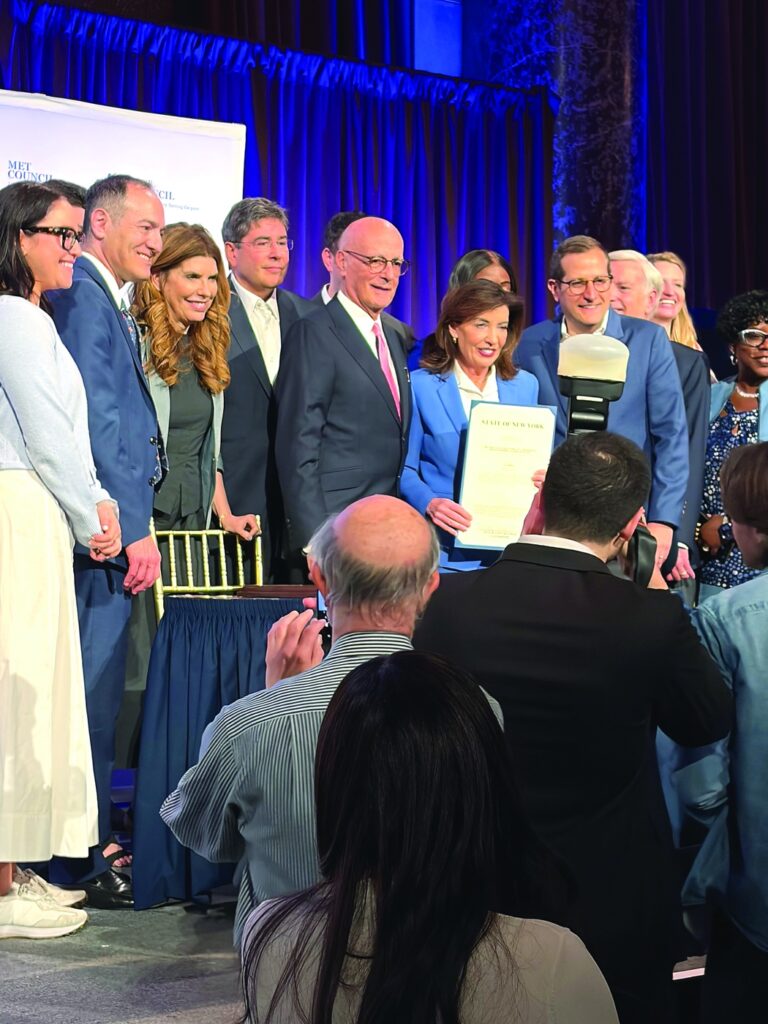
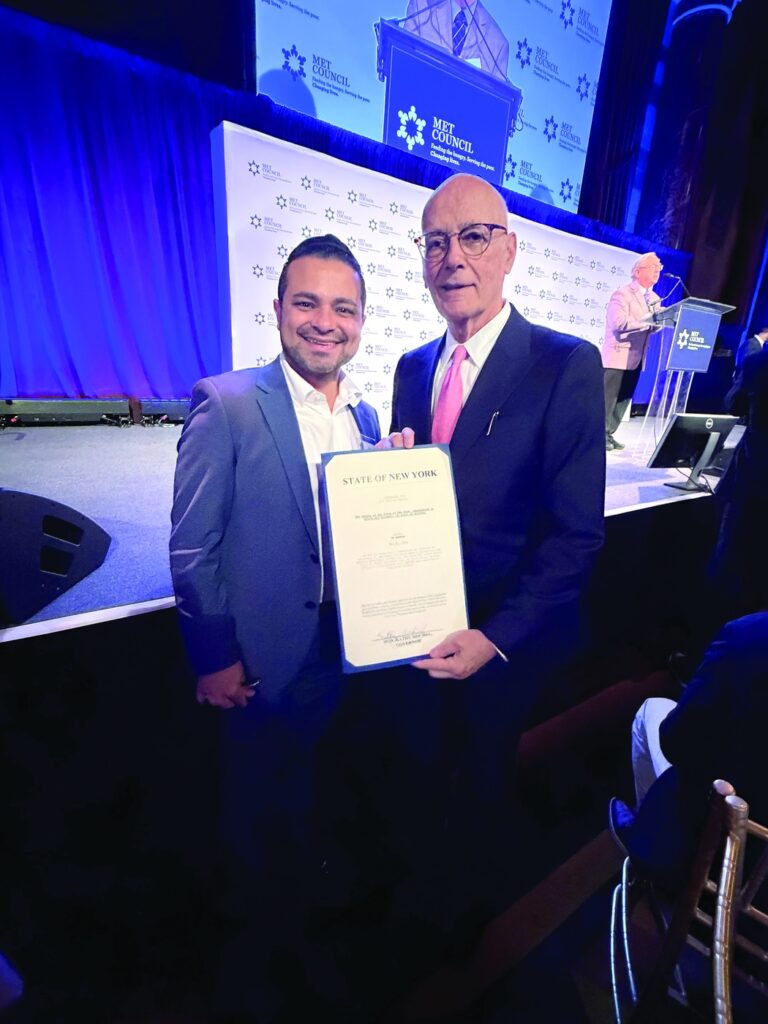

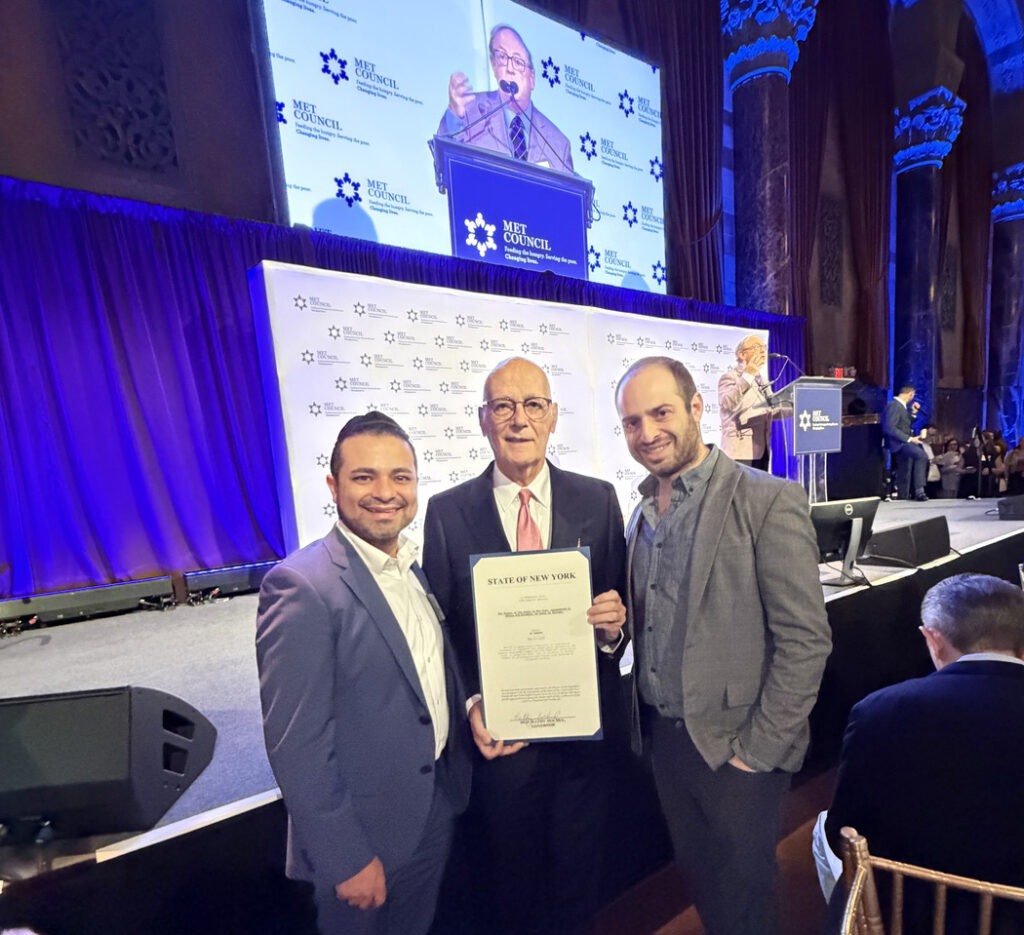
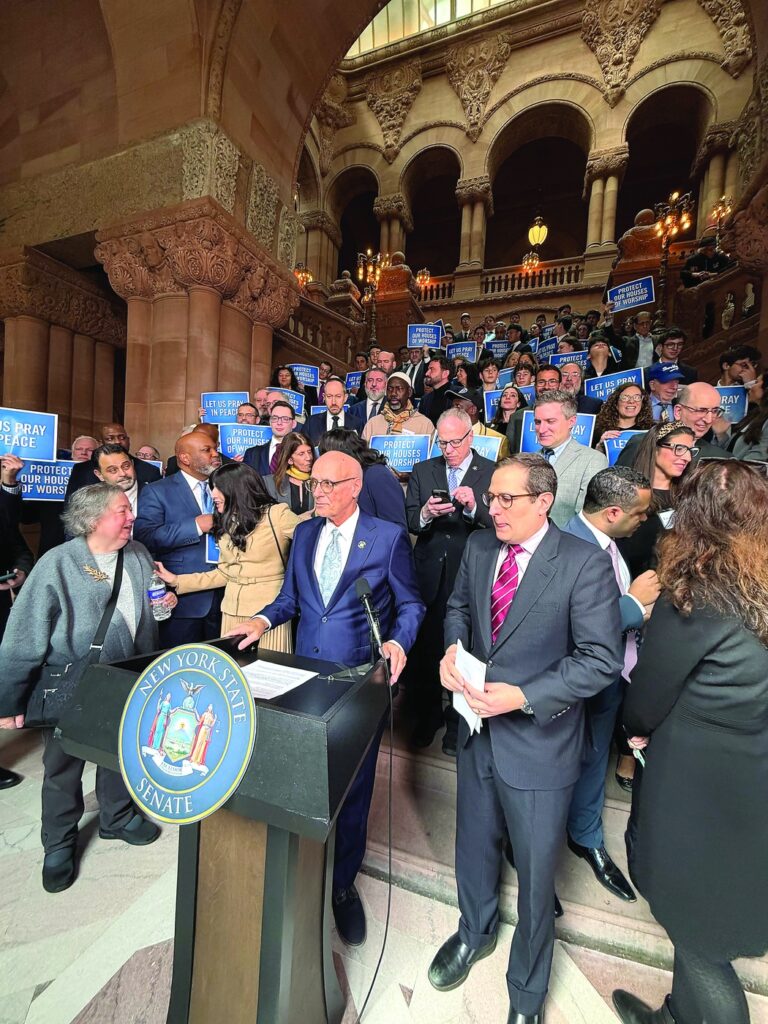
The origins of the bill trace back to an immediate and urgent response following the November Park East Synagogue incident. Senator Sutton, Joey Saban, and Eddie Esses immediately convened a meeting in Sam’s office to confront the question of what meaningful protections could be put in place. Out of that initial discussion came the decision to draft and introduce what would become the buffer zone legislation.
From that point forward, the process was defined by seven months of intense behind-the-scenes work. Senator Sutton and Joey Saban engaged in a relentless schedule of meetings with Senate leadership, Assembly counterparts, staff, and stakeholders across government. Throughout the process, there were many setbacks, shifting dynamics, and difficult negotiations. At various points, the legislation appeared stalled or uncertain, only to be revived again through persistent advocacy and renewed negotiations.
A critical moment came when Governor Hochul chose to personally adopt the legislation as part of her executive budget proposal. The Governor not only embraced the bill, but actively fought for its inclusion, elevating it within the broader budget negotiations. Senator Sutton was told directly by Governor Hochul that the issue was a “red line” priority for her, underscoring the level of commitment behind ensuring its passage.
This moment highlights the extraordinary role our community’s increased civic participation has had in making major change. In particular, it highlights the incredible impact that the election of Senator Sutton has truly made. This achievement demonstrates what becomes possible when a community organizes, votes, and places trust in one of its own to carry its voice into the halls of power. The passage of the buffer zone legislation is the direct result of that engagement, illustrating how sustained participation translated into tangible policy outcomes.
Significant credit deserves to be given to key legislative partners who helped navigate the bill through both chambers. Assemblymember Simcha Eichenstein served as Senator Sutton’s negotiating counterpart in the Assembly. He, along with the full Jewish delegation in the Assembly, helped guide the legislation through negotiations, strengthening the bill significantly. Assemblymember Micah Lasher, the original Assembly sponsor of the bill alongside Sutton, played a foundational role in shaping and advancing the legislation from its earliest stages.
Activism on the ground played a key role as well. The consistent and vocal activism of Abie Hamra was critical, whose online petition and sustained advocacy rallied the public in favor of the idea of buffer zones. After the bill was introduced, UJA-Federation of New York coalesced support among elected officials and interfaith leaders across New York State and coordinated a major online campaign to increase support in both chambers of state government.
Ultimately, the passage of the buffer bill is both a policy victory and a broader civic lesson. It reflects what can be achieved when we as a community move beyond concern and into action by voting, organizing, and engaging directly in the political process. If this level of participation and engagement can yield such significant results, then just imagine what even greater achievements are within reach. The message that emerges from this victory is clear: when the community shows up, organizes, and participates fully in civic life, it has the power to shape history and deliver meaningful change for generations to come.


