President Donald Trump has signed an executive order aimed at expanding access to in vitro fertilization (IVF) and lowering its costs, marking a major step toward making fertility treatments more affordable for American families.
A Push for Affordable IVF
The order directs the Domestic Policy Council to develop policy recommendations within 90 days to reduce the financial burden of IVF. With the average cost of a single IVF cycle reaching around $20,000—and in some cases exceeding $40,000 out-of-pocket—many couples struggle to afford treatment, particularly in states without insurance coverage.
This initiative follows Trump’s ongoing push for universal IVF coverage, aligning with his broader efforts to support family growth and reproductive health options.
Response to Alabama Ruling
The executive order also comes in response to the recent Alabama Supreme Court ruling that classified frozen embryos as children, leading to legal uncertainty and restrictions on IVF procedures in the state. The decision prompted widespread concerns that similar rulings could limit access to fertility treatments across the country.
What Comes Next?
With this executive order, the Biden administration is expected to explore policy solutions such as expanding insurance coverage, introducing federal subsidies, or implementing tax incentives for IVF procedures. The final recommendations from the Domestic Policy Council will be crucial in shaping the future of fertility care in the U.S.
Will this executive order make IVF more accessible to families nationwide? Stay tuned for updates as policy changes unfold.
Dressed in a suit and tie, and wearing a pair of high-heeled ladies shoes, comedian and former Toastmaster David ‘Hurdle’ Tawil began teaching public speaking to 25 rabbis, all students of the Shehebar Sephardic Center (SSC) in Jerusalem. Ten minutes pass before the students have the temerity to ask why he’s wearing ladies shoes. The answer: “until you put yourself in other people’s shoes, you will not be successful in any one-on-one endeavor, including public speaking.”
For centuries, scientists have marveled at the remarkable durability of Ancient Roman concrete. Structures like the Pantheon, which boasts the world’s largest unreinforced concrete dome, and aqueducts that still stand today, showcase its resilience. What made Roman concrete so much stronger than modern-day versions?
The Key Ingredients: Volcanic Ash & Lime
Unlike today’s concrete, which primarily relies on Portland cement, the Romans used a special mixture of pozzolana (volcanic ash), lime, and water. This combination gave their concrete superior strength and resistance to cracking over time. But researchers at MIT recently uncovered a game-changing secret behind its longevity: a method called “hot mixing.”
The Secret of “Hot Mixing”
In modern concrete, lime is pre-mixed with water before being added to the mixture. However, the Romans used quicklime (calcium oxide) and mixed it at high temperatures with their volcanic ash and water. This process caused the formation of small lime clasts—white mineral chunks previously mistaken for poor mixing.
How This Made Roman Concrete Self-Healing
When cracks formed in the concrete, water seeped into these lime clasts, triggering a chemical reaction that produced calcium carbonate. This reaction naturally “healed” the cracks, preventing further damage. Modern tests confirmed that Roman-style hot-mixed concrete could repair itself within two weeks, whereas standard concrete remains permanently damaged.
A Lesson for Modern Construction
By studying Roman engineering, scientists hope to develop longer-lasting and more sustainable building materials. Some companies are already experimenting with modified concrete formulas inspired by hot mixing, which could revolutionize construction by reducing repair costs and environmental impact.
Could the ancient Romans hold the key to the future of modern infrastructure? With their innovative techniques, they may have built more than just monuments—they may have left behind a blueprint for a more resilient world.
Imagine sitting down for a meal, only to feel a wave of irritation—or even rage—when someone starts chewing nearby. For people with misophonia, this isn’t just an annoyance; it’s a deeply distressing experience.
What Is Misophonia?
Misophonia is a condition where certain everyday sounds—like slurping, chewing, or pen clicking—provoke intense emotional reactions. While some may dismiss it as sensitivity, recent research suggests that misophonia is linked to the brain’s sound processing and emotional response systems.
How Common Is It?
A 2023 survey found that around 18% of the population experiences some degree of misophonia. While awareness of the condition is growing, many people still struggle in silence, often feeling misunderstood.
The Science Behind the Reaction
Recent studies reveal genetic links between misophonia and conditions like anxiety, depression, and PTSD. This suggests that misophonia may be part of a broader neurological and emotional framework rather than just an isolated issue.
Interestingly, misophonia is not linked to autism spectrum disorder. While both conditions involve sensory sensitivities, research indicates they are neurologically distinct.
Why Do Certain Sounds Trigger Misophonia?
Brain imaging studies have found that people with misophonia show heightened activity and connectivity in areas responsible for sound processing and social interactions. This could explain why misophonia tends to be more intense when the trigger sounds come from close family members rather than strangers.
Is There a Cure?
Currently, no cure exists for misophonia, but treatments like cognitive behavioral therapy (CBT) and sound masking techniques have helped many individuals manage their reactions. Some researchers are also exploring whether neuromodulation therapies could help regulate misophonic responses.
Final Thoughts
Misophonia is more than just being “easily annoyed”—it’s a genuine neurological condition that can significantly impact daily life. As research continues, the hope is to develop better treatments and increase awareness, ensuring that those affected are met with understanding rather than dismissal.
Do certain sounds trigger you? You’re not alone. Share your experiences!
The delinquency rate for bank loans to U.S. and foreign companies climbed to 1.3% at the end of 2024, the highest level recorded since 2017, according to data from BankRegData. Businesses struggled to meet debt obligations, with $28 billion in overdue payments—a $2.2 billion increase from the previous quarter and a $5.4 billion rise compared to the previous year.
Despite the surge, delinquencies remain well below the 5% peak seen during the 2008 financial crisis, indicating that the situation, while concerning, is not yet at crisis levels.
Who’s Feeling the Strain?
Most corporate bank loans have variable interest rates, meaning that as market rates increase, so do borrowing costs. While large corporations are generally navigating these challenges well, small and mid-sized businesses are facing increasing financial strain. Many companies that borrowed heavily during the era of low interest rates are now struggling to adjust to the new economic reality.
Banks Remain Optimistic
Despite the rise in delinquencies, major banks remain confident in business resilience. Bank of America reported a 5% growth in loan activity in the fourth quarter of 2024, while J.P. Morgan and Citigroup also noted continued strong business sentiment among borrowers.
As interest rates remain elevated, businesses will need to adapt to the changing financial landscape. Whether the delinquency trend worsens or stabilizes will depend on broader economic conditions, potential Federal Reserve rate cuts, and companies’ ability to refinance debt effectively.
Hamas has announced its readiness to cede control of Gaza to the Palestinian Authority (PA) as part of ongoing efforts to negotiate a long-term ceasefire with Israel. However, a key point of contention remains—Hamas has not yet agreed to disarm, a major condition for any lasting peace agreement.
Israeli Prime Minister Benjamin Netanyahu has firmly rejected the possibility of either Hamas or the PA governing Gaza after the conflict ends. His administration maintains that any future governance structure must ensure Israel’s security and prevent a repeat of the militant buildup seen in past ceasefires. Analysts warn that allowing Hamas to retain any military strength could create a situation similar to Hezbollah’s dominance in Lebanon, where the group maintains significant armed capabilities despite being part of the political landscape.
Amid these developments, an Israeli delegation has arrived in Cairo to engage in further negotiations regarding the ceasefire and hostage release agreements. The delegation’s immediate focus is on securing the release of the six remaining Israeli hostages still held by Hamas.
As diplomatic efforts continue, the future of Gaza remains uncertain. Whether Hamas fully relinquishes control—and under what conditions—will shape the region’s stability in the months and years to come.
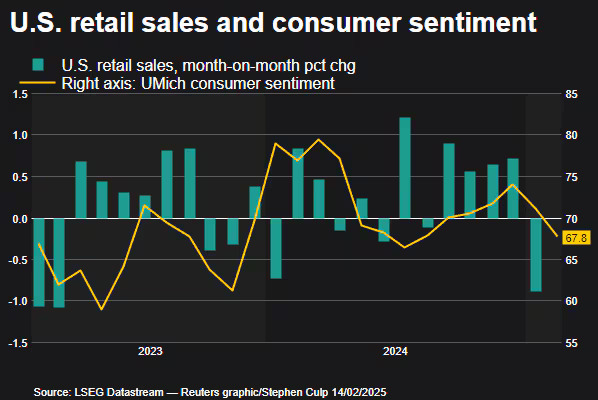
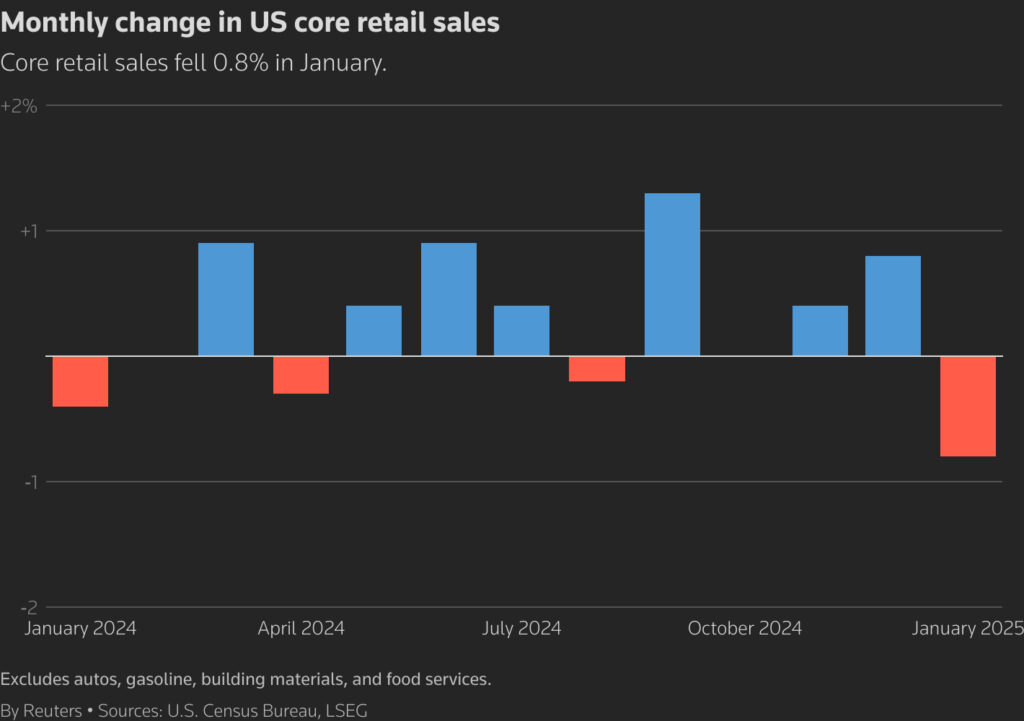
U.S. retail sales experienced their largest drop in nearly two years this January, impacted by extreme winter weather, wildfires, and vehicle shortages. According to the Commerce Department, sales fell by 0.9%, a significant decline following a 0.7% increase in December. Despite this setback, economists believe this dip does not signal a long-term shift in consumer behavior but rather reflects seasonal volatility.
Factors Behind the Decline
1. Harsh Weather Conditions: Severe snowstorms and freezing temperatures across the U.S. significantly limited shopping activity, while wildfires in Los Angeles disrupted commerce in one of the nation’s largest metro areas.
2. Motor Vehicle Shortages: Auto sales saw a steep drop of 2.8%, partially due to weather-related showroom closures and low inventory levels.
3. Consumer Sentiment and Tariffs: Economic uncertainty, including confusion over new tariffs on Mexican, Canadian, and Chinese imports, may have contributed to lower consumer spending.
Broader Economic Impact
While retail sales fell, certain sectors showed resilience. Food services and drinking establishments recorded a 0.9% increase, indicating that consumer discretionary spending remains steady in some areas. However, significant declines in online retail (-1.9%), sporting goods (-4.6%), and furniture and clothing sales suggest that consumers exercised caution in their spending.
Economists continue to predict that the Federal Reserve will not adjust interest rates until the latter half of the year, with inflation concerns and previous aggressive rate hikes keeping monetary policy steady. The Federal Reserve has already raised rates significantly in 2022 and 2023 to combat inflation, and it left them unchanged in January at a range of 4.25%-4.50%.
What Lies Ahead?
Despite the retail sales slump, labor market stability and high household wealth continue to provide underlying economic strength. The Atlanta Fed has adjusted its first-quarter GDP growth estimate down to 2.3% from a previous 2.9% forecast, reflecting the impact of weaker retail performance.
Tuan Nguyen, a U.S. economist at RSM US, noted that the economy’s underlying strength remains intact. “If that strength persists, we should expect sales to rebound in the coming months.”
Conclusion
While January’s sharp retail sales drop raises concerns, economists remain cautiously optimistic that this is a temporary downturn driven by external factors such as severe weather and supply chain constraints. With consumer spending showing resilience in select areas, the coming months will be key in determining whether this trend is a momentary blip or the start of a more cautious spending pattern.
In a bold move that underscores Ukraine’s commitment to its sovereignty, President Volodymyr Zelensky has rejected a proposal from the United States to take control of 50% of Ukraine’s mineral resources, including vital elements such as graphite, lithium, and uranium. The proposal, presented by US Treasury Secretary Scott Bessent, aimed to provide American investors with significant stakes in Ukraine’s resource sector, but it failed to secure Zelensky’s approval.
A Deal Without Security Guarantees
Zelensky’s primary concern revolved around the absence of security guarantees linked to the mineral access. Given the ongoing conflict with Russia, Ukraine’s leadership is highly cautious about any agreements that do not provide explicit protections for the country’s territorial integrity and national security.
“The people of Ukraine have suffered immensely due to the war,” Zelensky stated. “Any deal concerning our natural resources must align with our national interests and provide concrete security assurances.”
US Calls for Compensation
US National Security Adviser Mike Waltz defended the proposal, arguing that American taxpayers deserved compensation for the billions of dollars already spent on military and humanitarian aid to Ukraine.
“The US has been a steadfast ally to Ukraine,” Waltz said. “Our support has come at a significant cost, and we believe that access to critical resources is a fair way to ensure our continued partnership benefits both sides.”
However, Ukrainian officials remain wary of deals that could compromise their economic independence, particularly in the face of ongoing geopolitical threats.
Upcoming Peace Talks
As the mineral negotiations stall, high-level diplomatic discussions are set to take place regarding the broader geopolitical landscape. US Secretary of State Marco Rubio, National Security Advisor Mike Waltz, and envoy Steve Witkoff will represent the United States in upcoming peace negotiations with Russian officials in Saudi Arabia. These talks are expected to address potential ceasefire agreements and long-term strategies for regional stability.
Strategic Resources at Stake
Ukraine’s mineral wealth, particularly its lithium and uranium reserves, is of strategic importance in global markets. Lithium is a key component in electric vehicle batteries, while uranium plays a critical role in nuclear energy production. The rejection of this deal signals Ukraine’s intent to safeguard its economic assets, even as it navigates the challenges of war and international diplomacy.
With tensions high and negotiations ongoing, Ukraine’s decision sends a clear message: any economic agreement must align with national security interests and ensure the country’s sovereignty remains intact.
The human ear is an extraordinary organ, capable of detecting the faintest whispers while also withstanding the deafening roar of a concert or a jet engine. But how does it manage to process such a vast range of sound frequencies without being overwhelmed? Scientists have long studied the mechanics of hearing, but recent research has unveiled hidden mechanical modes within the cochlea, the inner ear structure responsible for converting sound into neural signals. These hidden modes help refine sound processing, improve low-frequency detection, and contribute to the ear’s ability to amplify and stabilize sounds.
This discovery not only deepens our understanding of auditory function but also opens new possibilities for enhancing hearing aids, cochlear implants, and treatments for hearing impairments.
The Cochlea: Nature’s Precision Sound Processor
At the heart of human hearing lies the cochlea, a snail-shaped organ in the inner ear filled with fluid and lined with sensory hair cells. These cells detect vibrations caused by sound waves and translate them into electrical signals that the brain can interpret. The cochlea operates across an astonishing range of frequencies, spanning three orders of magnitude, and can process sound intensities that vary over a trillion-fold in power.
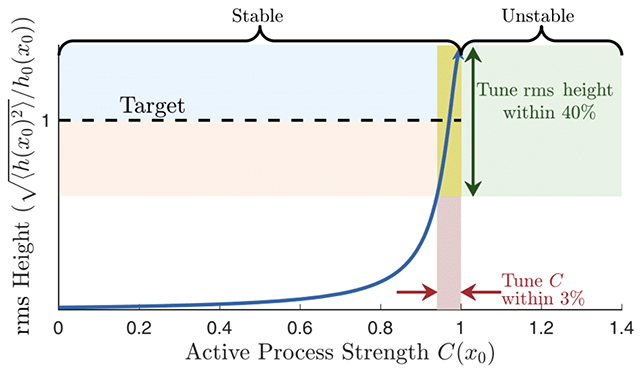
The researchers modeled ways in which the ear protects itself against overload. (Momi et al., PRX Life, 2025)
To manage this vast range, the cochlea uses a fine-tuned system of mechanical amplification and noise regulation. Until now, scientists believed that different sections of the basilar membrane (the structure inside the cochlea responsible for frequency separation) functioned independently to detect sound. However, the recent study challenges this assumption by revealing a previously unknown mode of cooperative movement within the cochlea.
The Discovery of Hidden Mechanical Modes
Researchers found that certain sections of the basilar membrane do not work in isolation—instead, they interact in ways that enhance low-frequency sound detection. These hidden mechanical modes allow the cochlea to process soft sounds more efficiently while maintaining stability against loud noises.
This means that the ear is equipped with a built-in dynamic fine-tuning system that helps us distinguish subtle sounds in noisy environments. These hidden modes could explain why some people are more sensitive to lower frequencies than others and why our ears can adjust to different listening conditions without distortion.
Auricular Muscles: An Evolutionary Relic with Purpose?
In addition to uncovering new cochlear mechanics, researchers also examined the role of auricular muscles—tiny muscles surrounding the outer ear that were long thought to be vestigial remnants of evolution. While these muscles are highly functional in many animals (allowing dogs, cats, and horses to move their ears independently to locate sound sources), humans lost this ability over time.
However, the study found that these muscles still activate during difficult listening tasks, suggesting they may serve a subtle but crucial role in sound localization and auditory focus. This discovery hints that the human auditory system may be more adaptable than previously believed, potentially offering new insights into how the brain prioritizes and processes auditory information in complex environments.
Implications for Hearing Technology and Future Research
Understanding these hidden hearing mechanisms has profound implications for audiology and hearing aid technology. By mimicking the cochlea’s newly discovered amplification and stabilization functions, researchers could develop more advanced hearing aids and cochlear implants that provide clearer and more natural sound perception.
Additionally, this research could pave the way for new treatments for hearing loss, particularly for individuals who struggle with low-frequency sound detection or sensory overload in noisy environments.
As scientists continue to explore the complexities of the auditory system, one thing becomes clear: the human ear is far more sophisticated than we ever imagined. What was once thought to be a simple system of vibration and signal conversion is actually a finely tuned, dynamic, and adaptable mechanism—one that has evolved to provide us with one of the richest sensory experiences possible.
Conclusion: A New Chapter in Hearing Science
The discovery of hidden mechanical modes in the cochlea and the potential role of auricular muscles marks a new chapter in hearing science. Whether for better hearing devices, improved treatments for auditory disorders, or simply a deeper appreciation for the marvel of human biology, these findings highlight the incredible sophistication of our ears.
So the next time you hear the distant chirping of birds or a quiet conversation across the room, remember—your ears are doing far more than you realize, operating with a complexity that even science is still uncovering.
Cancer is a relentless and cunning disease, capable of manipulating the body’s natural systems to sustain itself and evade destruction. Recent discoveries have shed light on two major ways in which cancer—especially aggressive brain tumors like glioblastoma—exploits both the nervous and immune systems to thrive. These findings not only change our understanding of cancer biology but also pave the way for potential new treatments that could disrupt these deadly interactions.
How Cancer Manipulates the Nervous System
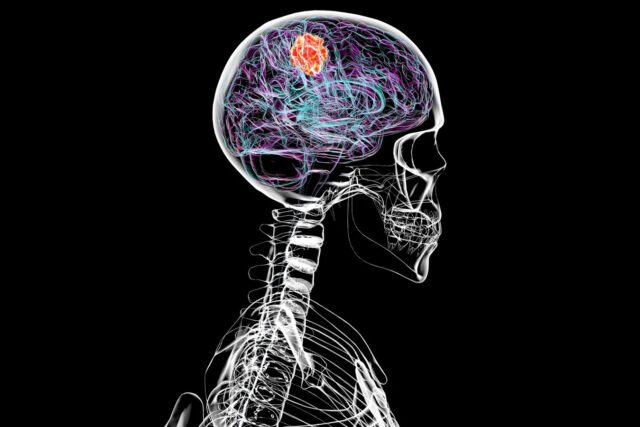
The nervous system is a highly complex network responsible for sending signals throughout the body. However, recent research has revealed that certain cancers, particularly glioblastoma, exploit neuron activity to accelerate their own growth.
The Connection Between Neurons and Cancer Growth
Scientists studying mouse models found that when neurons were artificially stimulated, tumor growth accelerated. This suggests that glioblastoma doesn’t just passively exist in the brain; instead, it actively interacts with neurons, potentially using their electrical signals and neurotransmitters to fuel its expansion.
This discovery has led researchers to investigate whether brain activity levels in human patients could influence tumor progression. Could certain stimuli, like stress or mental activity, impact tumor growth? If so, understanding and controlling these interactions could open up new ways to slow down the disease.
Can We Block This Interaction?
One promising avenue of research involves targeting the communication pathways between neurons and cancer cells. If scientists can develop therapies that disrupt this interaction, they might be able to starve the tumor of the signals it relies on, potentially slowing or even halting its growth.
How Cancer Hijacks the Immune System
The immune system is supposed to be our body’s first line of defense against diseases, including cancer. However, cancer cells have evolved strategies to evade immune attacks—and one of the most shocking discoveries is that cancer can steal energy from immune cells.
The Role of Mitochondria in Immune Cells
Mitochondria are often called the “powerhouses of the cell” because they generate the energy that cells need to function. In a healthy immune response, tumor-infiltrating lymphocytes (TILs) detect and attack cancerous cells. However, recent research has shown that cancerous tumors steal healthy mitochondria from TILs, essentially draining their power.
Once these immune cells are left with defective mitochondrial DNA (mtDNA), they become exhausted and ineffective, allowing the tumor to grow unchecked.
The Impact of Immune Exhaustion
When TILs lose their energy, they can no longer effectively fight cancer. This means that even if a person’s immune system recognizes the cancer, it may not have the strength to attack it. This exhaustion is one reason why tumors in aggressive cancers continue to grow despite the presence of immune cells nearby.
New Research: Fighting Back Against Cancer’s Tricks
Understanding how cancer manipulates both the nervous and immune systems opens up new possibilities for treatment. Scientists are now exploring ways to block mitochondrial theft and disrupt neuron-tumor communication to prevent cancer from taking advantage of these systems.
Potential Treatment Approaches
Repurposed Medications: Some early-phase trials are testing drugs that could interfere with the process of mitochondrial transfer, helping TILs maintain their energy levels and effectiveness.
Targeting Neuron-Tumor Communication: By disrupting the signals between neurons and cancer cells, researchers hope to cut off a crucial energy source for tumors.
Immune System Boosters: Therapies designed to re-energize exhausted TILs could restore their ability to attack cancer cells.
These findings represent a major breakthrough in cancer research. While there is still much work to be done, scientists are now one step closer to understanding cancer’s hidden tactics—and more importantly, how to stop them.
Cancer may be an expert at hijacking the body’s natural systems, but with these new discoveries, the fight against it is gaining powerful new weapons.
TikTok is again available in the US after the Trump administration offered assurances that the ban would not be enforced
TikTok has officially returned to Apple and Google app stores in the US after a brief removal, following an executive order by President Trump that granted ByteDance, the app’s Chinese parent company, a 75-day deadline to divest its US operations or face a potential ban. The move comes amid growing concerns over data privacy and national security, with US officials pushing for American ownership of the platform.
With over 170 million American users, TikTok remains one of the most influential social media platforms, particularly among younger audiences. Despite regulatory uncertainty, the app’s popularity continues to surge, recording more than 52 million downloads in 2024 alone—52% from Apple’s App Store and 48% from Google Play. Analysts estimate TikTok’s US operations could be worth around $50 billion.
The Biden administration, alongside congressional lawmakers, has expressed concerns that TikTok’s data policies could pose risks if user information is accessible to the Chinese government. In response, ByteDance has repeatedly denied allegations of data misuse and has taken steps to increase transparency, including storing US user data domestically through partnerships with American tech firms.
President Trump is currently in discussions with potential buyers, and a decision on TikTok’s future could be announced within the month. The situation remains fluid, with major tech companies, private equity firms, and investors closely watching the outcome. As negotiations continue, millions of users and businesses relying on TikTok for content creation, marketing, and e-commerce await clarity on the app’s long-term presence in the US.
A person pushes a shopping cart at a Costco store ahead of Black Friday in Arlington, Virginia, U.S., November 27, 2024. REUTERS/Benoit Tessier/File Photo
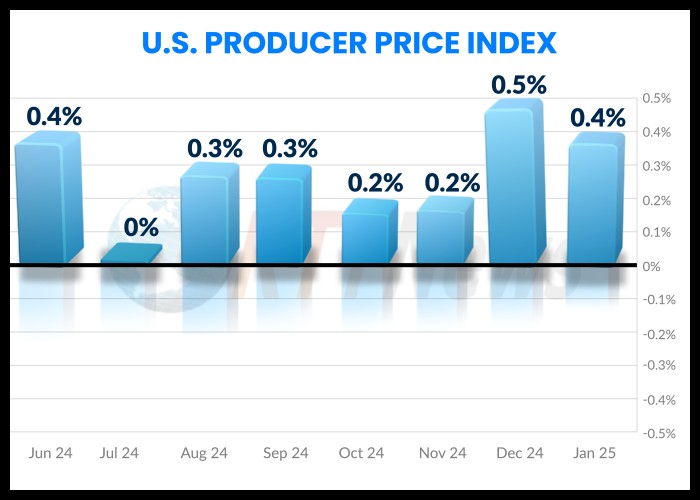
The U.S. economy saw notable shifts in January as producer prices increased while jobless claims declined, reflecting continued economic activity and labor market resilience.
Producer Prices Increase
The Producer Price Index (PPI), which measures the prices that businesses receive for their goods and services, rose by 0.4% in January. This followed a revised 0.5% increase in December, indicating persistent price pressures in the supply chain. On a year-over-year basis, producer prices were up by 3.5%, highlighting ongoing inflationary trends.
Wholesale goods prices experienced a 0.6% uptick, primarily driven by a 1.7% increase in energy costs. The energy sector’s rising costs had a cascading effect on various industries, contributing to the overall increase in producer prices. Food prices also surged by 1.1%, with egg prices seeing a particularly sharp rise of 44%, largely due to an avian flu outbreak that led to a significant reduction in poultry supply.
Meanwhile, service-related costs climbed 0.3%, reflecting higher consumer demand and operational expenses. Notably, hotel room prices spiked by 5.7%, driven by increased travel activity and seasonal factors.
Jobless Claims Decline
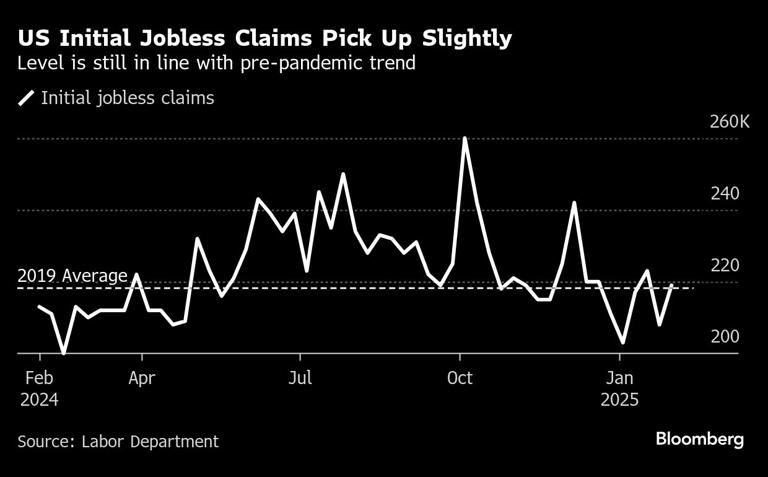
Despite rising producer prices, the labor market displayed resilience, as initial jobless claims dropped by 7,000 to 213,000 in January. This decline suggests a stable employment environment, with fewer individuals filing for unemployment benefits. Continuing jobless claims also fell by 36,000 to 1.85 million, indicating that more workers are securing employment or exiting the unemployment system.
Nonfarm payrolls added 143,000 jobs in January, reflecting steady hiring across various industries. The unemployment rate remained at 4.0%, signaling a balanced labor market where job opportunities continue to be available, despite broader economic concerns.
Economic Outlook
The increase in producer prices suggests that inflationary pressures remain a challenge for businesses and consumers alike. Higher input costs could lead to increased consumer prices, potentially influencing Federal Reserve policy decisions regarding interest rates.
However, the decline in jobless claims and steady employment growth indicate economic resilience. If labor market stability continues, consumer spending may remain strong, helping sustain economic momentum despite inflationary pressures.
As the Federal Reserve monitors these economic indicators, future policy decisions will likely focus on balancing inflation control with labor market health. The coming months will be crucial in determining whether producer price increases stabilize and how the labor market responds to evolving economic conditions.
ript
0:01
more than two dozen people were hurt
0:03
when a car plowed into a crowd in Munich
0:05
on Thursday in what the state Premier
0:07
said was probably an attack it put
0:10
security back in Focus before next
0:12
week's federal election the incident
0:14
came hours before International leaders
0:17
including US vice president JD Vance
0:19
were due to arrive for the Munich
0:21
security conference the gathered crowd
0:23
were out demonstrating as part of a
0:25
public sector workers strike police said
0:27
the motivation of the driver an afghan
0:29
asy Seeker was unclear one shot was
0:32
fired at
0:33
him at around 10:30 a vehicle drove into
0:37
a group of people several people were
0:39
injured we are on the scene with a large
0:41
police contingent in addition to us the
0:43
fire and Rescue Services are also on the
0:46
scene the person who was driving the
0:48
vehicle is currently being secured so we
0:50
assumed that there is no longer any
0:52
danger to the public at the moment
0:54
iwitness Alexa graef said the car was
0:56
going fast enough to pull 10 or 15
0:59
people to the ground
1:01
there were some injured people sitting
1:03
on the bench right next to our editorial
1:05
office some of them were also carried in
1:07
here into the entrance hall it was
1:09
impossible to get out and they were
1:11
somehow treated by paramedics I saw all
1:13
the people lying on the ground
1:15
immigration and security issues have
1:17
dominated campaigning ahead of the
1:19
February 23rd election with polls
1:22
showing the center right conservatives
1:24
leading followed by the far right recent
1:27
attacks where immigrants have been
1:29
arrested have fueled this conversation
1:31
with six people killed in a magur
1:33
Christmas Market in December and an
1:36
adalon toddler killed in the Bavaria
1:38
region last month bavaria's interior
1:41
Minister said he did not suspect there
1:42
was a connection to the Munich security
1:44
conference which starts on Friday
Munich was rocked by a violent attack when a 24-year-old Afghan asylum seeker, identified as Farhad N., deliberately drove his vehicle into a crowd during a trade union demonstration, leaving at least 28 people injured. The incident has reignited a fierce debate over Germany’s immigration policies and security measures, especially as the country approaches a crucial national election in just ten days.
The Attack: A Deliberate Act of Violence
The attack took place in a public square where demonstrators had gathered for a trade union protest. Witnesses described the terrifying moment when the speeding car rammed into the crowd, sending people fleeing for their lives. Emergency responders quickly arrived at the scene to treat the injured, some of whom suffered severe wounds.
Law enforcement acted swiftly, with an officer firing a shot at the vehicle to bring it to a stop before arresting the suspect. Officials are treating the incident as an act of terrorism, though investigations are ongoing to determine whether Farhad N. had connections to extremist groups or acted alone.
The Suspect: A Case That Highlights Immigration Challenges
Farhad N. first entered Germany in 2016 during the height of the European migrant crisis. He applied for asylum but was ultimately denied. However, like many rejected asylum seekers, he was not deported due to bureaucratic hurdles and legal challenges. This case underscores a growing issue in Germany’s immigration system—thousands of individuals with failed asylum claims remain in the country, often in legal limbo.
Government Response: Calls for Stricter Immigration Policies
Chancellor Olaf Scholz wasted no time in addressing the attack, condemning it in the strongest terms and promising decisive action. “This man must face consequences and leave the country,” Scholz declared, signaling a tougher stance on asylum enforcement. He emphasized that violent individuals who pose a threat to public safety must not be allowed to stay in Germany.
Authorities have vowed to review deportation policies and tighten enforcement measures to prevent similar incidents. The attack has also renewed discussions on improving background checks and security screenings for asylum seekers.
Political Ramifications: Immigration Becomes a Key Election Issue
With the national election just days away, the Munich attack has added fuel to an already heated political debate. The far-right Alternative for Germany (AfD) party, known for its strong anti-immigration stance, has seized upon the incident to argue for stricter border controls and mass deportations of failed asylum seekers.
AfD leaders have blamed the German government’s immigration policies for allowing dangerous individuals to stay in the country. The party has already been gaining momentum in recent months due to rising concerns over crime and national security. This attack is likely to further boost their support among voters who feel the government has been too lenient on immigration.
Meanwhile, centrist and left-wing parties are urging caution, warning against using the tragedy for political gain. They argue that focusing solely on deportations without addressing broader integration challenges and social policies could create further divisions within German society.
Security Concerns: A Renewed Focus on Counterterrorism
The Munich attack has also highlighted concerns about Germany’s preparedness to prevent and respond to such incidents. Law enforcement agencies have faced criticism in the past for failing to track potentially dangerous individuals who remain in the country despite being denied asylum.
Security experts are calling for stronger monitoring of high-risk individuals, including those with extremist tendencies or violent criminal records. Some officials are pushing for increased cooperation between European intelligence agencies to track potential threats more effectively.
What’s Next? The Future of Germany’s Immigration Policy
As Germany grapples with the aftermath of this attack, the government faces mounting pressure to take concrete action on immigration enforcement and public safety. The outcome of the upcoming election could determine the country’s future approach to asylum policies, deportations, and security measures.
For now, Munich mourns the victims of this senseless act of violence while the nation debates how to prevent such tragedies in the future. The coming days will be crucial in shaping both political narratives and government policies on immigration and national security.
Each year, health insurance companies process approximately 5 billion claims, with a staggering 850 million claims facing denial. Despite the high number of denials, less than 1% of policyholders take the next step to appeal. However, those who do appeal have a strong chance of success—75% of appeals result in a reversal of the insurer’s decision. Understanding how to navigate the appeals process can significantly increase your chances of overturning a denied claim.
Step 1: Understand the Denial Reason
The first step in appealing a denied health insurance claim is to understand why it was rejected. Insurers must provide a written explanation outlining the reason for denial, which typically falls under one of the following categories:
Lack of medical necessity – The insurer claims the treatment is not medically necessary.
Out-of-network provider – Services were obtained from a provider not covered by the plan.
Incorrect coding – Errors in medical billing codes may have led to the rejection.
Pre-authorization issues – Some treatments require prior approval, which may not have been obtained.
Step 2: Act Quickly and Keep Records
Health insurance companies impose strict deadlines for appeals, often requiring submission within 30 to 180 days after receiving the denial notice. To avoid missing these deadlines, initiate the appeal process as soon as possible. Keeping meticulous records of all correspondence, including emails, phone calls, and letters from both your healthcare provider and insurer, is crucial in building a strong case.
Step 3: Contact Your Insurance Provider
Before formally appealing, call your insurer’s customer service department to discuss the denial. Sometimes, denials result from administrative errors that can be quickly corrected. If the insurer maintains its decision, request specific details on how to appeal, including necessary documentation and deadlines.
Step 4: Obtain Supporting Evidence from Your Doctor
A well-documented appeal supported by medical evidence has a higher chance of success. Ask your doctor to write a detailed letter explaining why the treatment or procedure was necessary. The letter should reference medical records, test results, and standard treatment guidelines to reinforce the argument.
Step 5: Submit a Formal Appeal Letter
If the initial attempt fails, prepare a written appeal addressed to the insurer’s appeals department. A strong appeal letter should include:
Your policy number and claim details
The reason for denial provided by the insurer
Medical documentation and doctor’s support letter
A clear explanation of why the denial is incorrect
Ensure that your appeal is sent via certified mail or a secure online portal so that you have proof of submission.
Step 6: Escalate to an External Review
If the insurer upholds the denial after your internal appeal, you have the right to request an external review. This process involves an independent third party assessing whether the denial was justified. In 2023, state insurance departments reversed 41% of reviewed denials, highlighting the importance of pursuing this option.
Step 7: Seek Assistance from Advocacy Groups
Navigating the appeals process can be challenging, but various organizations, such as state consumer assistance programs and advocacy groups like Claimable, can provide guidance and support. These groups can help draft appeal letters, review policies, and advise on legal options if necessary.
Final Thoughts
Facing a denied health insurance claim can be frustrating, but understanding the appeals process can greatly improve your chances of success. By acting promptly, gathering strong medical evidence, and escalating your appeal when necessary, you can effectively challenge an unfair denial and secure the coverage you deserve.