Home Blog Page 40

A Night of Resilience and Faith: Yaniv Ben Haim Shares His Story of October 7 at DSN Beach Club

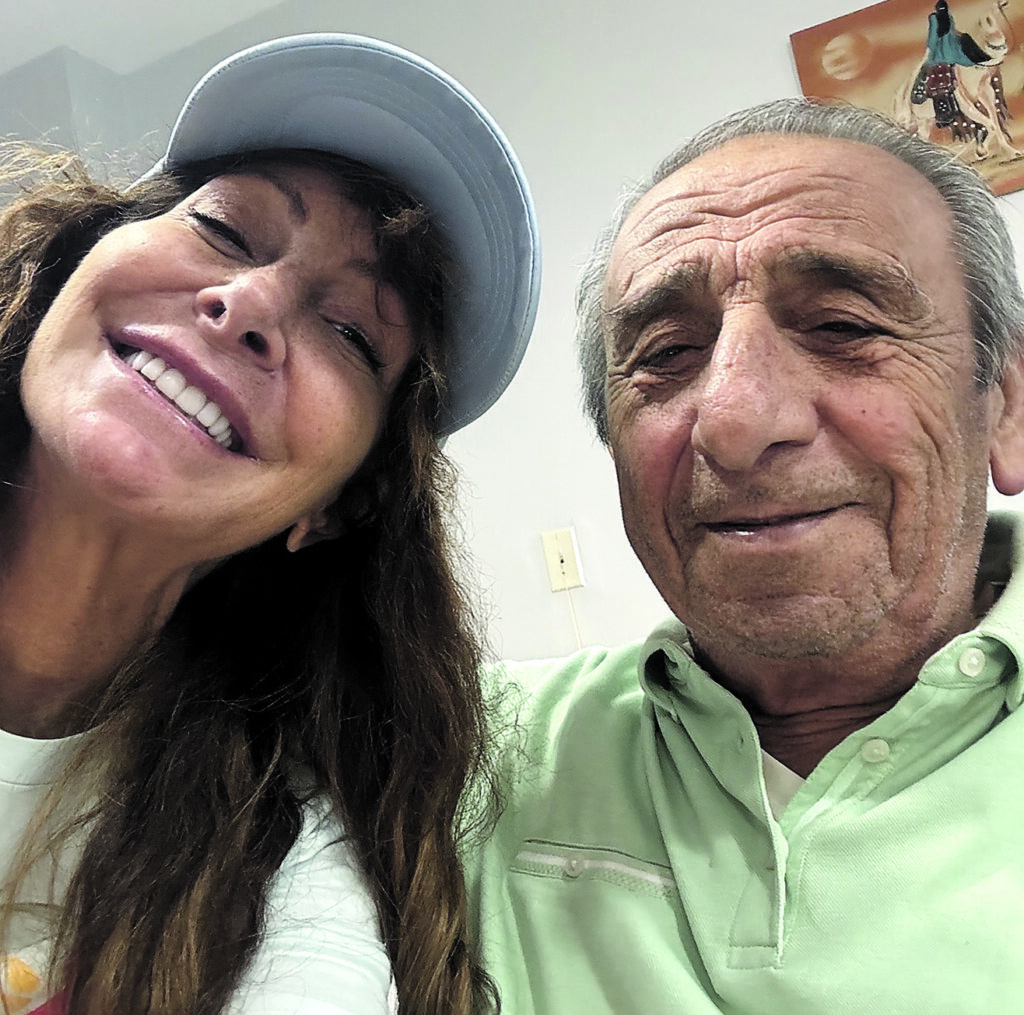
Left to right: Chabad Chazan Shalom Jacobs, Yaniv Ben Haim & his Mother

On the evening of February 5, the DSN Beach Club played host to another unforgettable event—one that transcended mere storytelling and became a testament to the resilience of the human spirit. Yaniv Ben Haim, a 24-year-old survivor of the harrowing October 7 attack at the Nova festival, stood before a rapt audience, sharing his harrowing journey of survival, faith, and perseverance.

This event was a product of remarkable collaboration, with DSN joining forces with the SCC, SCA, Chabad of the Shore, and Congregation Brothers of Israel to bring Yaniv from Israel to share his testimony. Moderated by DSN Executive Board Member Steven Kassin, the evening was a profound reflection on the darkest of times and the light that emerges from within.
Yaniv recounted his experience at the NOVA music festival, where he and his friends were caught in an unimaginable nightmare. With gripping detail and the support of a compelling PowerPoint presentation, he spoke of the many close encounters he had with death, the atrocities he witnessed, and the friends he tragically lost. Yet, amid the horror, there was an unexpected savior—an Arab man whom Yaniv now calls his “angel.” This story reaffirmed the complexity of humanity and the power of compassion in the face of hate.
“In the darkest moments, when fear took over, I realized I had two choices—give in to despair or hold onto faith—faith in myself and in G-d,” Yaniv shared, his words resonating deeply with those in attendance. His journey of escape, the lessons he has embraced since that day, and his unwavering belief in miracles served as a beacon of hope and inspiration.
The evening was made even more poignant by the presence of Yaniv’s family and mother in the audience, as she had flown in from Israel to hear her son share his story in this public setting. His cousin translated for him, adding an intimate and deeply emotional dimension to the night. DSN Member Mordi Kameo, whose wife is Yaniv’s cousin, stated that “Listening to Yaniv’s story left tears in the room- but happy and grateful tears. Tears of gratitude that Hashem protected him each step he took that day October 7. Hashem brought him back alive after being at the Nova festival, and now it was beautiful to have him share his story with all of us”.


Left to right: Steven Kassin, Yaniv Ben Haim, Translator, Rabbie Greenberg and Shalom Jacobs
Left to right: Translator and Yaniv Ben Haim

Adding to the evening’s impact was the heartfelt participation of Chabad’s Rabbi Yaakov Greenberg and Chazan Shalom Jacobs, whose soul-stirring rendition of Mi Sheberach left the audience in solemn reverence. The room was thick with emotion, a collective moment of prayer and unity that underscored the event’s significance. Jacobs said, “It was an honor to spend the evening with another true hero. Standing in front of those who have literally put their lives on the front lines- for our people and our country- not just on October 7, but every day, was an indescribable experience. Singing in everyone’s presence gave each song a deeper, more powerful meaning, filled with gratitude, strength and resilience. Their bravery and sacrifice are beyond words, and it was a privilege to share this moment with them”.
The night was more than an opportunity to hear a survivor’s story; it was a moment of communal strength, remembrance, and reaffirmation of faith. Steven Kassin noted that the “DSN Beach Club continues to be a space where stories are honored, connections are deepened, and resilience is celebrated and I was deeply humbled to have been a part of it”.


Is Your Retirement SavingsPlan on Track?

Retirement is the dream, isn’t it? A time to leave behind the daily grind, travel, relax, & spend more time with loved ones. But the path to that dream can feel uncertain, especially when it comes to saving enough to fund the lifestyle you’ve worked so hard to achieve. It’s a concern shared by many—what if your savings fall short, or worse, run out before you’re ready?

For many Americans, the figure of $1.5 million is seen as a benchmark for a comfortable retirement. But is that number right for everyone? Probably not. Your unique circumstances, from career choices to personal goals, shape what you truly need for your retirement years. The key to building confidence in your retirement plan is to understand where you stand today and where you want to be. Our team recommends starting with savings milestones based on your age.
By Age 30: Aim to have saved the equivalent of your annual salary. Starting early allows you to take full advantage of compound growth.
By Age 40: Try to have three times your salary saved. Balancing growing expenses while maintaining steady contributions is key at this stage.
By Age 50: Work toward saving six times your salary. This is a good time to focus on reducing debt and maximizing retirement contributions.
By Age 60: Aim for eight times your salary. Start thinking about your retirement timeline and whether working part-time might fit into your plans.
By Age 67: Ideally, you’ll have 10 times your annual salary saved if you’re planning to retire around Social Security’s full retirement age. For example, a $100,000 annual salary would mean a goal of $1 million.
These guidelines are not rigid rules but serve as helpful benchmarks. After all, everyone’s journey is different, and your savings trajectory will depend on factors like when you started saving, your income growth, and how your priorities evolve.
Beyond the numbers, the lifestyle you envision for retirement plays a major role in determining how much you’ll need. Do you dream of traveling the globe, or are you planning to downsize and simplify? These choices shape your financial goals as much as any milestone. For instance, retiring in a high-cost city may require a much larger nest egg than settling into a quieter, low-cost town. If international travel is in your future, budgeting for it in advance can ensure those dreams don’t stretch your finances too thin.
Another critical piece of the puzzle is timing. When you choose to retire has a direct impact on how much you need to save. Retiring earlier means you’ll need your savings to last longer, particularly if there’s a gap between leaving the workforce and the age you qualify for Social Security or pension benefits.
Of course, retirement planning isn’t just about the big picture; it’s also about the small, steady steps you take along the way. The earlier you start saving, the more powerful the effect of compound interest becomes, allowing your money to grow exponentially over time. Even small contributions in your 20s and 30s can make a huge difference by the time you’re ready to retire. If your employer offers a retirement plan with matching contributions, make it a priority to contribute enough to get the full match—it’s essentially free money for your future.
When you finally retire, your income will likely come from a mix of Social Security benefits, pensions, and personal savings. Knowing how much you can rely on each source and comparing it to your projected expenses will help you identify any gaps. If those gaps exist, creating a plan to close them—whether by adjusting your savings rate or considering part-time work in retirement—can provide peace of mind.
Retirement planning is not about chasing an arbitrary number; it’s about creating a roadmap for the life you want. The sooner you start asking questions and seeking clarity, the better prepared you’ll be to make informed decisions about your future. And while the process may seem overwhelming at times, you don’t have to go it alone. Working with a financial professional can help you clarify your goals, navigate the complexities of planning, and develop a personalized strategy that makes your dream retirement a reality.
The best time to start planning for retirement is yesterday, but the second-best time is today. Taking even small steps now can bring you closer to the retirement you deserve—a future that’s not just financially secure, but one where you can truly thrive.

The content is developed from sources believed to provide accurate information. Investing involves risk including the potential loss of principal. No investment strategy can guarantee a profit or protect against loss in periods of declining values. Past performance does not guarantee future results. Consult with a financial professional regarding your specific situation.

Ari Baum, CFP® is the Founder and CEO of Endurance Wealth Partners, with over 25 years of experience in the Financial Services industry. He brings his in-depth experience to Conceive. Believe. Achieve. for his clients.
Securities and Advisory services offered through Prospera Financial Services Inc. Member FINRA/SIPC. Brokerage and Advisory accounts carried by Wells Fargo Clearing Services, LLC.

Ari Baum, CFP®

Randi’s Care

Where Every Senior Matters

There is nothing in the world—let alone in our community—like Randi’s Care. Founded by the compassionate and visionary Randi Tamir, this heartfelt initiative is dedicated to enriching the lives of our seniors, our loved ones. More than just providing basic care, Randi’s mission is to make dreams come true. She goes beyond traditional caregiving, understanding each individual’s unique needs and infusing their days with joy, purpose, and excitement.

For many seniors, life can become monotonous—days spent in front of a television, accompanied solely by an aide. But Randi changes everything. She immerses seniors in engaging activities, from spirited games to dancing to lively music, reigniting the childlike wonder that time has dulled. Her presence brings energy and happiness into homes, lifting spirits and transforming routines.
Randi acts as an extension of the family, stepping in when loved ones, despite their best intentions, struggle to provide the level of care and attention their seniors truly deserve. She challenges them to dream again, taking them on outings to Broadway shows, shopping malls, and movie theaters. She doesn’t just care for seniors; she revives them, bringing light and laughter back into their lives. Her impact extends beyond the seniors—she revitalizes entire households, inspiring caregivers and aides to bring renewed enthusiasm to their roles.
Like a superhero, Randi arrives just in time to uplift spirits and transform moods. Now, by transitioning her initiative into a nonprofit, she aims to train a team to carry forward her mission, ensuring that every senior can experience the warmth, care, and excitement she brings.
Each visit begins with Randi arriving with a bag of games and a speaker playing Frank Sinatra, Arabic classics, or nostalgic hits from the 1960s, 1970s, and 1980s. Music, she believes, sets the tone, evoking memories and emotions that bring seniors back to life. She works closely with aides to ensure seniors receive the attention they deserve, and when a senior is hospitalized without support, she steps in—bathing them, giving manicures and pedicures, and applying makeup. For those who have aides, she joins in, adding fun and warmth to their care.
Randi’s essence is carnival fun—she brings a carnival to someone’s house. It’s all wrapped up in a whirlwind of excitement: painting projects, card games, hysterical fun, and multiple activities tailored for each person. She sets up games and fun stations—golf, spike ball, basketballs, oversized LEGOs, bowling matches, and more. Even those who struggle to move find themselves standing with support, laughing and playing. She creates whimsical playhouses, brings the joy of outdoor fun, and organizes lively bingo matches.


Randi’s infectious joy creates moments of magic—people who haven’t smiled in years light up with happiness. She transforms an ordinary day into an extraordinary celebration. It’s not just an activity—it’s a carnival of love and laughter right at home.
Randi calls her favorite day Sunday Funday—because why shouldn’t our seniors get to have fun too? Each Sunday, she brings extra energy, more games, and even more laughter, making it a day filled with joy and connection. She believes that every senior deserves to experience the excitement and joy that weekends bring.
More than just a service, Randi’s Care is a movement—a call to ensure that our seniors are never forgotten. They are the pillars of our families and communities, and they deserve to be cherished. Randi will not let us forget them. Whether by donating Shabbat meals, offering companionship, or simply showing up with a listening ear, she ensures that no senior feels abandoned. She is the person to call—the one who will be there when it matters most.

The Future of Randi’s Care:
Expanding Joy and Support
With this nonprofit initiative, Randi is removing financial barriers to care, ensuring that every senior, regardless of their financial situation, has access to dignity and joy. Through community donations and fundraising, her organization will provide essential services such as:

  • Personal Care Assistance – Helping seniors with bathing, grooming, and hygiene, ensuring they feel their best.
  • Companionship and Stimulation – Engaging them in music, games, and chair exercises to keep both their minds and bodies active.
  • Special Outings and Celebrations – Taking seniors on meaningful trips, whether to a favorite store, a Broadway show, or simply a scenic walk.
  • Medical and Emotional Support – Escorting seniors to appointments, offering comfort in difficult times, and ensuring they always have someone by their side.

Randi’s work has already transformed countless lives in hospitals, nursing homes, and private residences. Now, with the structure of a nonprofit, she can reach even more people who need her unique brand of care and love.

How You Can Help
If you’d like to support Randi’s mission, there are several ways to make a difference:

  • Make a Donation – Every contribution helps bring joy and care to seniors in need.
  • Volunteer Your Time – Whether visiting seniors, assisting at events, or simply offering companionship, every effort counts.
  • Spread the Word – Share Randi’s mission with those who may need her services or want to support her cause.
    Through her nonprofit, Randi Tamir is ensuring that no senior is forgotten. With kindness, dignity, and a deep commitment to joy, she is revolutionizing senior care, one smile at a time. For more information on how to support Randi’s Care, call Randi Levy 917-353-9674.

The Unforgivable Murderof the Bibas Family

There are moments when words fail—when language itself is too weak, too inadequate to capture the sheer magnitude of horror. This is one of those moments.
Consider the image: a mother, arms wrapped around her babies—not for herself, not out of fear, but in one final act of protection against the terror closing in. She wasn’t pleading for her own life. She was whispering to her children, soothing them as only a mother can, even as she knew that the monsters had come.
And they came. Let’s be absolutely clear: this was not war. This was not an accident. This was the calculated, premeditated slaughter of Jewish infants. Their only crime? Being Jewish. But the depravity did not stop there. When Hamas returned the bodies, they did so in locked coffins with no keys. The IDF had to force them open, wary of booby traps, because Hamas weaponizes even the dead.


Then came the final twist of cruelty. The woman’s body they returned? It wasn’t even Shiri’s. Forensic experts confirmed it—Hamas handed over a random corpse, as if any mutilated woman would suffice, shocking Israel and the world. Hamas chose to taunt, deceive, and desecrate. And how did Gaza respond? They celebrated. They poured into the streets like a parade, rejoicing over coffins. They cheered, danced, and raised their children—not to mourn, not to grieve, but to glorify the slaughter of Jews. The same people who demand “humanitarian aid” turned a funeral into a festival. Twenty-four hours later, they returned her body, claiming it was a simple mix-up.
And the world? The world watched. Oh, and let’s talk about the world. Let’s talk about the people who sip their overpriced oat milk lattes, adjusting their Gucci belts and Dior sunglasses between bites of their avocado toast, smugly convincing themselves they’re on the right side of history. The ones who scream about oppression from the comfort of their West Elm couches while living off trust funds their fathers built in the very system they claim to hate. These are the people who ripped down hostage posters, sneering as they tossed them into garbage bins between SoulCycle classes. The ones who chant “free Palestine” as they post selfies from their iPhones. The ones who sit in Brooklyn cafés, draped in designer brands, while celebrating the assault and murder of Israeli women.
They call themselves “activists.” They call themselves “progressives.” They call themselves moral. But let me tell you exactly what they are. They are frauds. They are accomplices to terror. Just as the world looked away during the Holocaust, they look away now. They look away from the babies burned alive. From the families tortured and executed in front of each other. They look away—or worse, they cheer.
But we will not look away. We will not let these faces disappear into history, reduced to another footnote in the world’s indifference. We will not allow their deaths to be excused as “the price of war” while their murderers are shielded by the lies of victimhood. And we will not be told to forgive. Forgiveness is for those who seek redemption. For those who acknowledge their crimes and beg for atonement. Forgiveness is not for monsters.


It is not for those who butcher Jewish babies and then parade their own infants as trophies. It is not for those who turn funerals into celebrations. It is not for those who hand over a mutilated body and call it justice. It is not for the latte-drinking, Prada-wearing, basement-dwelling “revolutionaries” who actively cheer for Jewish genocide. There can be no coexistence with those who celebrate death. There can be no peace with those who raise their children to revel in slaughter. There can be no mercy for those who have none.
So don’t ask me to temper my words. Don’t ask me to soften my rage in the name of diplomacy. Let’s not forget what happened on October 7. It was not just babies slaughtered in their homes. It was entire families burned alive, young women dragged from their beds and assaulted in the streets, elderly Holocaust survivors abducted from their wheelchairs. It was fathers shot in front of their children, concertgoers massacred in the hundreds, and human beings hunted down, executed, and desecrated—just for being Jews. This was the largest massacre of Jews since the Holocaust.
The world may want to forget. But WE will not. Because they did not get to wake up today. They will never see tomorrow. And that is an injustice so profound, so unforgivable, that it demands more than grief. It demands action. It demands vengeance. The world can wring its hands and issue its platitudes. But the only language these monsters understand is the one spoken through fire and iron. And that is exactly what they should receive.
No, we will not forget. And no, we will never, ever forgive.
In the face of such profound loss, we hold onto hope. We pray for the safe return of all those still missing. May they come back to us alive, and may their families find solace in their reunion.

Linda Argalgi Sadacka is a writer, political strategist, community organizer, and Jewish activist dedicated to combating antisemitism. A delegate for the ZOA in the WZO elections, she works to protect Jewish interests worldwide. Known for her impactful advocacy, media presence, and writing, she actively mobilizes communities and fights for Israel. Follow her on Instagram: @LindaAdvocate

Linda Argalgi Sadacka

Gaza Truce on the Brink as Israel Sets New Conditions

A fragile ceasefire between Israel and Hamas is at risk of collapsing after Israel blocked humanitarian aid into Gaza, citing Hamas’ refusal to extend the truce without agreeing to end the war or withdraw troops. This move has sparked international concern, with aid groups and the United Nations condemning Israel’s decision as a political maneuver at the expense of civilians.

Background of the Ceasefire Agreement

The ceasefire deal, which began on January 19, was structured in three phases:

  1. Phase One: Lasted 42 days and involved the release of 33 Israeli hostages in exchange for 1,737 Palestinian prisoners. Israel withdrew from urban centers but maintained a military presence along Gaza’s borders.
  2. Phase Two: Planned for another 42 days, it aimed to secure a full ceasefire, complete Israeli withdrawal, and the release of all living hostages in exchange for additional Palestinian prisoners.
  3. Phase Three: Would focus on rebuilding Gaza and establishing long-term stability.

However, the agreement stipulated that negotiations should continue for the truce to remain in effect. Talks on Phase Two were supposed to begin in early February, but they have been delayed amid mutual accusations of bad faith.

Israel’s Position

Israel now proposes extending Phase One for another 42 days, allowing further hostage exchanges without committing to ending the war. Prime Minister Benjamin Netanyahu asserts this approach, backed by U.S. envoy Steve Witkoff, ensures continued negotiations while keeping military pressure on Hamas. However, Hamas has rejected this proposal, leading Israel to suspend all humanitarian aid into Gaza.

“In light of Hamas’ refusal to accept the framework for continuing the talks—which Israel had agreed to—Prime Minister Netanyahu has decided that as of this morning, all entry of goods and supplies into the Gaza Strip will be stopped,” said Netanyahu’s office on Sunday.

Israeli authorities insist that humanitarian aid cannot resume unless Hamas agrees to the revised terms. Netanyahu has also warned of “additional consequences” if Hamas continues to reject the proposal.

Hamas’ Response

Hamas has strongly condemned Israel’s actions, calling the blockade on humanitarian aid “cheap blackmail” and a “war crime.” The group insists that negotiations for Phase Two should commence as originally planned, focusing on a permanent ceasefire and a complete Israeli withdrawal from Gaza.

“We reaffirm our commitment to implementing the signed agreement in its three stages and have repeatedly announced our readiness to begin negotiations for the second stage of the agreement,” Hamas stated.

International Reactions

The decision to halt aid has drawn widespread criticism:

  • Egypt, a key mediator, rejected the politicization of humanitarian aid and urged the international community to compel Israel to allow its entry.
  • Qatar denounced the use of food as a “weapon of war.”
  • The United Nations warned that the aid suspension is “alarming” and emphasized that international humanitarian law requires unrestricted access to essential supplies.

Meanwhile, U.S. officials have expressed support for Israel’s efforts to secure hostage releases but have not explicitly endorsed the aid blockade. White House National Security Council spokesperson Brian Hughes stated, “Israel has negotiated in good faith to ensure the release of hostages. We support their decision on next steps given Hamas’ unwillingness to engage.”

What’s Next?

The standoff over the truce’s future puts both hostages and millions of Gazan civilians at risk. Netanyahu is under pressure from far-right elements within his government to resume full-scale military operations, a move that could be more likely under the new Trump administration. Meanwhile, hostages’ families have called on the U.S. to push for a single-phase deal ensuring the immediate release of all captives.

In a controversial move, Israeli sources have indicated that Israel will not withdraw from Gaza’s Philadelphi Corridor along the Egypt-Gaza border, a key condition of Phase Two. Additionally, Israeli forces have continued targeted strikes in Gaza despite the ceasefire, citing security threats.

With humanitarian aid at a standstill and diplomatic efforts faltering, the fate of the truce—and the lives of those caught in the conflict—remains uncertain. International mediators now face an uphill battle to salvage peace talks and prevent a full-scale return to hostilities.

Source: CNN, The Guardian, The New York Times, BBC

Global Obesity Crisis: Over Half of Adults Expected to Be Overweight by 2050

A new study published in The Lancet warns that more than half of the world’s adults and a third of children, teenagers, and young adults could be overweight or obese by 2050. With obesity rates accelerating, particularly in lower-income countries, experts are calling for urgent intervention to prevent what they describe as a “profound tragedy.”

Rising Obesity Rates Across the Globe

By 2021, nearly half of the global adult population—over 2 billion people—were already overweight or obese. The proportion has doubled since 1990, and if trends continue, obesity rates among adults could climb to 57.4% for men and 60.3% for women by mid-century.

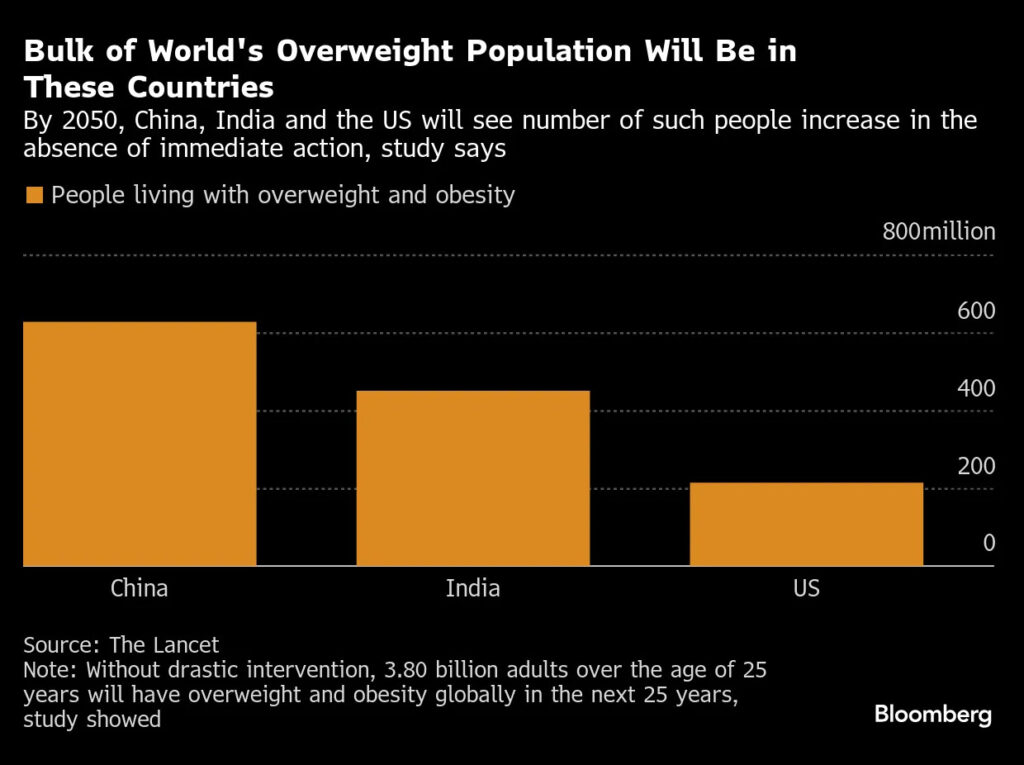
Countries with the largest projected overweight and obese populations include:

  • China: 627 million
  • India: 450 million
  • United States: 214 million

Sub-Saharan Africa is expected to see the most dramatic increase, with the number of overweight adults rising by over 250%—from 147 million in 2021 to an estimated 522 million by 2050. Nigeria, in particular, is expected to experience a surge, with its overweight and obese population tripling to 141 million.

The Impact on Younger Generations

The study highlights a disturbing trend among young people. Between 1990 and 2021:

  • Obesity rates in children and younger teenagers jumped from 8.8% to 18.1%.
  • Among young adults (under 25), obesity rates more than doubled from 9.9% to 20.3%.

By 2050, one in three young people is expected to be affected, putting immense pressure on healthcare systems.

A Call for Immediate Action

Researchers stress that governments must act now to reverse these trends. Prof. Emmanuela Gakidou of the University of Washington, who led the study, urged policymakers to target the most vulnerable populations with both prevention and treatment strategies.

“The unprecedented global epidemic of overweight and obesity is a profound tragedy and a monumental societal failure,” she stated.

Dr. Jessica Kerr, co-lead author from the Murdoch Children’s Research Institute, emphasized the need for multifaceted interventions to prevent intergenerational obesity and reduce future health and economic burdens.

Potential Game Changers: Weight Loss Medications

The study does not account for the impact of emerging weight-loss medications, which could significantly alter future obesity trends. However, experts agree that long-term solutions must include healthier diets, increased physical activity, and stronger public health policies.

The Road Ahead

With obesity already linked to serious conditions like diabetes, heart disease, and cancer, governments must act swiftly to prevent worsening public health crises. The question remains—will global leaders take the necessary steps to reverse this alarming trend before it’s too late?

Source: BBC, New York Post, SciTechDaily

Global Stock Markets Plunge Amidst U.S. Tariff Escalation

Stock markets worldwide suffered significant losses after U.S. President Donald Trump introduced sweeping tariffs on imports from China, Canada, and Mexico, igniting fears of an escalating trade war. The new measures include a 25% tariff on imports from Canada and Mexico and a 20% tariff on Chinese goods.

Immediate Market Reactions

The tariffs triggered sharp declines across major stock indexes. In the United States, the Dow Jones Industrial Average plummeted by 1.5%, while the S&P 500 dropped by 1.8%. Asian markets also reacted negatively, with Japan’s Nikkei 225 falling 1.2% and China’s Hang Seng Index slipping by 0.3%. European markets were not spared either, as the UK’s FTSE 100 opened lower, followed by declines in Germany and France.

International Retaliation

In response to the U.S. tariffs, Canada and China announced retaliatory import taxes on American goods. Canadian Prime Minister Justin Trudeau condemned the U.S. move, calling it “unjustified” and vowing to impose 25% tariffs on $150 billion worth of American imports, beginning with an immediate $30 billion in duties. Trudeau also warned that additional tariffs amounting to $125 billion would follow in the coming weeks if the U.S. does not withdraw its trade restrictions.

Meanwhile, China implemented 10-15% tariffs on key U.S. agricultural exports, including wheat, corn, beef, and soybeans, which are vital to American farmers. Chinese Foreign Ministry spokesperson Lin Jian warned that China would “fight to the bitter end” if the U.S. continued its tariff escalation.

Mexico has yet to announce specific retaliatory measures but assured the public that it has multiple contingency plans in place. President Claudia Sheinbaum stated, “We have Plan A, Plan B, Plan C, and even Plan D.”

Potential Economic Fallout

Economists and market analysts warn that tariffs could drive up prices for U.S. households and impact global consumers. Tariffs function as a tax on imported goods, which companies often pass down to consumers in the form of higher prices. The International Chamber of Commerce highlighted that these tariffs represent the most significant increase in U.S. trade restrictions since the 1940s and could pose severe risks to the global economy.

Analysts at Yale University estimate that the tariffs could cost U.S. households an additional $2,000 per year. Additionally, a TD Economics study predicts that car prices in the U.S. could rise by an average of $3,000 due to the complex supply chain between the U.S., Canada, and Mexico, where automotive parts cross borders multiple times before final assembly.

Food prices are also expected to rise, particularly for products heavily reliant on imports. Mexican avocados account for nearly 90% of the U.S. market, meaning the cost of avocados could soar. Similarly, Canada, which produces 75% of the world’s maple syrup, could significantly impact U.S. syrup prices.

The Broader Trade War Concerns

Trump has defended the tariffs, arguing that they will boost domestic manufacturing, create jobs, and increase tax revenues. However, many economic experts caution that protectionist policies often lead to countermeasures from trade partners, ultimately harming businesses, workers, and consumers.

Chris Torrens, vice president of the British Chamber of Commerce in China, warned that the tariffs might dismantle historic trade alliances, including between the U.S. and Europe. “We are seeing what looks like the dismantling of a transatlantic alliance between the U.S. and Europe. However, this could also open the door for stronger UK-China relations.”

With global markets reacting sharply and economic risks mounting, it remains to be seen whether the U.S. administration will reconsider its stance or whether this is just the beginning of an extended trade conflict with worldwide repercussions.

Source: BBC

Trump and TSMC Announce $100 Billion Investment in U.S. Chip Factories

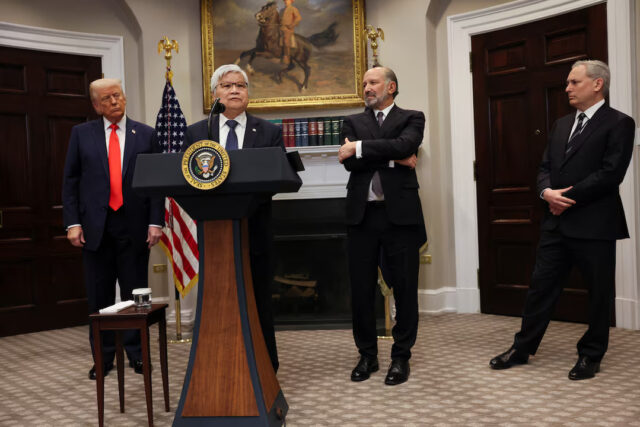
In a landmark move aimed at strengthening America’s semiconductor industry, Taiwan Semiconductor Manufacturing Co. (TSMC) has unveiled plans for a massive $100 billion investment in the United States. The announcement, made jointly by TSMC CEO C.C. Wei and President Donald Trump at the White House, highlights efforts to reduce reliance on foreign chip production and bolster national security.

A Strategic Shift in Semiconductor Manufacturing

TSMC, the world’s largest contract chipmaker, is a crucial supplier to major U.S. tech firms, including Nvidia, Qualcomm, and AMD. The investment will fund the construction of five additional chip fabrication plants across the U.S. These facilities will include three new chip fabrication plants, two advanced packaging centers, and a major research and development hub.

President Trump emphasized the importance of domestic semiconductor production, stating, “We must be able to build the chips and semiconductors that we need right here. It’s a matter of national security for us.” The move aligns with his broader strategy to incentivize American manufacturing and reduce reliance on Taiwan amid increasing geopolitical tensions with China.

Expanding U.S. Semiconductor Capacity

The announcement follows TSMC’s previous commitment to invest $65 billion in U.S. operations, including the construction of a third Arizona factory by 2030. The new investment represents a substantial escalation of those efforts, with construction expected to create 40,000 jobs over the next four years.

While the exact timeline for the new factories remains undisclosed, the initiative underscores a growing shift toward domestic chip production. TSMC’s first Arizona plant, initially plagued by delays and cost overruns, commenced production in 2024. However, higher operational costs in the U.S. remain a concern for the company. “Higher costs are definitely a concern for TSMC,” said Andrew Tsai, chairman of Capital Investment Management Corp.

A Lifeline for Intel and Industry Stability

Beyond securing U.S. supply chains, the investment could have significant implications for the struggling semiconductor giant Intel. Reports suggest that Trump administration officials have engaged in discussions with TSMC about taking a majority stake in a joint venture within Intel’s manufacturing unit. While Intel has yet to comment on these discussions, such a move could signal a potential collaboration between the two industry leaders.

Geopolitical and Economic Ramifications

For Trump, the deal is a major political victory, reinforcing his campaign promise to strengthen American industries and create jobs. The announcement also follows similar commitments from Apple, SoftBank, and Emirati billionaire Hussain Sajwani, who have all pledged multi-billion-dollar investments in the U.S. economy.

Taiwan’s government has responded cautiously to the investment, emphasizing the need for regulatory review. Taiwan’s Presidential Office stated that while the investment aligns with Taiwan’s global competitiveness, it will ensure that the country retains its most advanced semiconductor technology. Spokesperson Karen Kuo noted, “This ensures that while TSMC expands its investment in the U.S., the most advanced processes will remain in Taiwan.”

The Role of the CHIPS Act and U.S. Government Support

TSMC’s expansion in the U.S. is partly driven by the 2022 CHIPS and Science Act, which provides $52.7 billion in subsidies for American semiconductor production. Under this legislation, TSMC has already secured a $6.6 billion government subsidy for its Arizona operations. The new $100 billion investment will also be eligible for a 25% manufacturing investment tax credit.

Trump’s administration was instrumental in bringing TSMC to the U.S. in 2019, setting the stage for the CHIPS Act. The act aims to counter China’s semiconductor dominance and mitigate supply chain vulnerabilities. Commerce Secretary Howard Lutnick stated that companies like TSMC are strategically investing in the U.S. to avoid new tariffs introduced by Trump’s administration.

Looking Ahead: The Future of U.S. Semiconductor Manufacturing

The announcement signals a significant shift in global semiconductor production, with TSMC committing to advanced chip-making technologies in the U.S. The company has agreed to produce 2-nanometer chips in its second Arizona factory by 2028, a major technological leap that could position the U.S. as a key player in the semiconductor industry.

While challenges such as high operational costs and geopolitical considerations remain, the investment marks a crucial step toward securing America’s technological future. As TSMC and the U.S. government continue their partnership, the long-term impact of this initiative on global semiconductor supply chains will be closely watched.

Source: Reuters

Read Jewish Image Magazine Online – March 2025

March 2025 Jewish Image Magazine

Israel Increases Pressure on Hamas to Extend Ceasefire

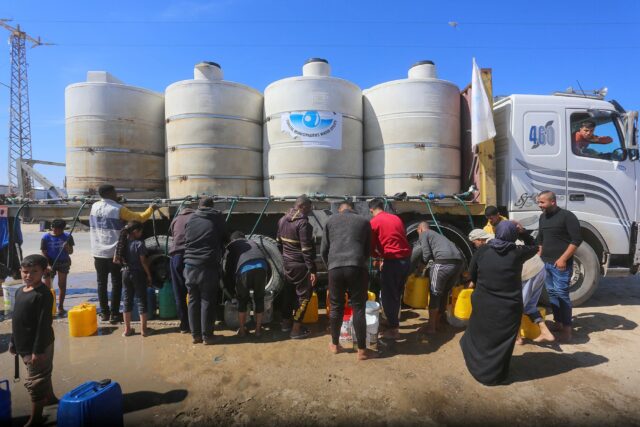
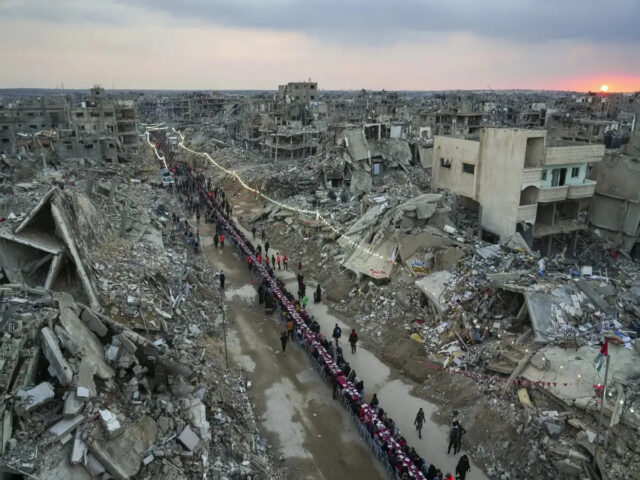
Israel has escalated its pressure on Hamas following the militant group’s refusal to extend the ceasefire, halting all entry of goods into Gaza. The truce, initially brokered with international mediation, expired at midnight on March 2, leading to renewed tensions and humanitarian concerns.

Netanyahu’s Stance and Israel’s Justification

Israeli Prime Minister Benjamin Netanyahu defended the decision, asserting that Israel had already permitted the entry of sufficient supplies into Gaza to sustain the region for several months. The government maintains that humanitarian aid should not be provided without corresponding action from Hamas, specifically the release of hostages still in captivity.

In a bid to maintain the ceasefire, Israel proposed an extension that would last through Ramadan and Passover, significant religious periods for both Muslims and Jews. The proposal included the immediate release of half of the remaining hostages as a condition for continued humanitarian aid.

Hamas Rejects Proposal, Calls Israel’s Move a ‘War Crime’

Hamas outright rejected Israel’s proposal, branding the decision to cut off aid as a “war crime” and an act of “cheap extortion.” The group argues that withholding humanitarian assistance punishes civilians and exacerbates an already dire humanitarian crisis in Gaza. The blockade, which includes restrictions on food, medicine, and other essential supplies, has raised concerns among international organizations and aid agencies.

Humanitarian Concerns and International Response

With the blockade in place, humanitarian organizations warn of an impending crisis, as essential supplies dwindle. The United Nations and other global entities have called for an immediate resumption of aid to prevent further civilian suffering. The situation has also drawn mixed reactions from world leaders, with some urging restraint and diplomatic engagement while others back Israel’s stance on conditioning aid on hostage releases.

Potential Outcomes and Next Steps

As diplomatic efforts continue behind the scenes, the future of the ceasefire remains uncertain. If no agreement is reached, the blockade and potential military escalations could further inflame the conflict. On the other hand, renewed negotiations could pave the way for a prolonged truce and a phased resolution to the hostage situation.

For now, Gaza remains on edge as both sides stand firm on their positions, with international mediators working tirelessly to broker a solution that can prevent further escalation and humanitarian disaster.

Sources: TOI, WallStreetJournal, CNN, DW, France24, APNews.

Herpes Reactivation: How the Virus Outsmarts the Immune System

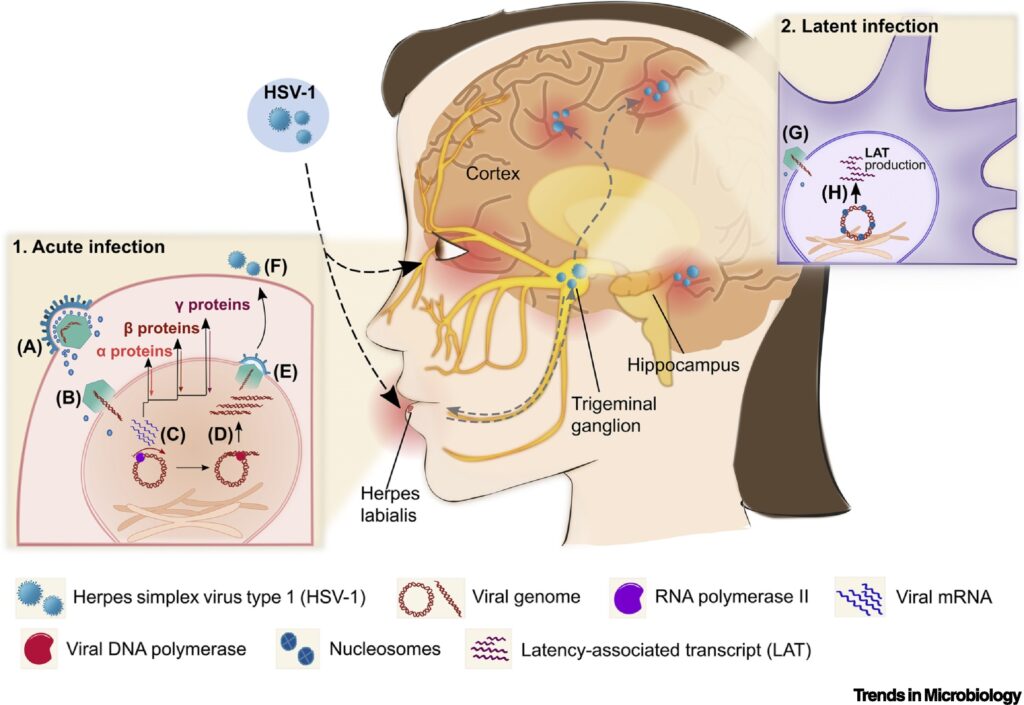
Herpes simplex virus (HSV) is a master of evasion, lying dormant in the body only to reactivate when conditions are right. Researchers have now uncovered a key mechanism behind this reawakening—the virus can hijack the immune system’s defenses to trigger its own reactivation.

How Herpes Reactivates

Scientists found that a viral protein plays a crucial role in manipulating immune responses. Instead of being suppressed by the body’s defenses, the herpes virus actually uses them as a signal to emerge from dormancy. This means that common immune system activations—such as fighting off infections, stress, or even hormonal changes—can serve as a wake-up call for the virus.

A Widespread Global Concern

Herpes simplex virus 1 (HSV-1), responsible for cold sores, affects over 3.8 billion people worldwide, with more than 60% of individuals under 50 carrying the virus. In the U.S., HSV-1 is now responsible for more new cases of genital herpes than its close relative, HSV-2.

New Hope for Treatment

This discovery has opened new doors for treatment strategies. Scientists believe that by targeting the viral protein responsible for reactivation, they may be able to prevent future outbreaks. This could lead to breakthrough therapies that stop the virus from reawakening, offering relief to millions who suffer from recurrent flare-ups.

As research progresses, this newfound understanding of herpes reactivation could pave the way for long-term solutions—potentially keeping the virus permanently at bay.

Sources: SciTechDaily, NewsRoom.

First Private Moon Landing: Firefly Aerospace’s Blue Ghost Makes History

In a groundbreaking achievement, Firefly Aerospace’s lunar lander, Blue Ghost, successfully completed the first fully private soft landing on the moon. The lander confirmed a stable touchdown in Mare Crisium, an ancient volcanic area, at 3:34 a.m. ET, marking a significant milestone in commercial space exploration.

A New Era in Lunar Exploration

Standing 6.6 feet tall and 11 feet wide, Blue Ghost carried 10 scientific experiments for NASA, designed to expand our understanding of the moon’s surface and environment. Among the key instruments onboard were a vacuum for soil analysis and a drill capable of measuring temperatures up to 10 feet below the surface. This mission is set to provide valuable insights into lunar conditions, paving the way for future manned missions.

Mission Details & Technological Feats

The journey to the moon covered an impressive 2.8 million miles, and Blue Ghost executed an extraordinary precision landing within its 328-foot (100-meter) target zone. The mission’s total cost was $101 million, with an additional $44 million invested in the advanced technology onboard.

Firefly Aerospace plans to operate the lander for 14 days, during which it will conduct extensive data collection and capture high-definition images of the lunar landscape. The success of this mission sets a precedent for future commercial lunar exploration and strengthens partnerships between private space companies and government agencies like NASA.

The Future of Private Space Missions

The success of Blue Ghost demonstrates the viability of private sector involvement in space exploration. Firefly Aerospace is already planning follow-up missions that could further support NASA’s Artemis program and establish a sustainable human presence on the moon.

This historic landing is not just a win for Firefly Aerospace but a testament to the growing role of private enterprises in shaping the future of space travel. With continued advancements, commercial missions could soon become the backbone of lunar exploration, opening the door for deeper space ventures beyond the moon.

Sources: APNews, Reuters, FireflySpace, SFN, CNN.

Europe’s ‘Coalition of the Willing’ Rallies Behind Ukraine

London Summit Unites European Leaders Amid Rising Geopolitical Tensions

Amid growing uncertainty over U.S. support for Ukraine, European leaders convened in London to form a stronger, unified stance in aid of Kyiv. The summit, dubbed the “Coalition of the Willing,” aimed to reaffirm Europe’s commitment to Ukraine’s sovereignty and defense against Russian aggression. The meeting followed a tense exchange between former U.S. President Donald Trump and Ukrainian President Volodymyr Zelensky, highlighting the shifting geopolitical landscape.

Britain Leads the Charge

British Prime Minister Keir Starmer took center stage at the summit, announcing a significant £1.6 billion ($2 billion) loan to Ukraine. The funding will be used to bolster Kyiv’s air defenses, specifically providing 5,000 advanced air defense missiles. Starmer stressed the critical juncture at which Europe finds itself, warning, “We are at a crossroads in history. Now is the time to stand firm in our support for Ukraine.”

His remarks underscored the growing consensus among European nations that bolstering Ukraine’s military capabilities is essential, not only for the country’s survival but for the security of the continent as a whole. He further emphasized the importance of maintaining a strong U.S. partnership in peace negotiations, despite political uncertainties in Washington.

Challenges in Increasing Military Spending

While the summit yielded commitments to sustain military assistance to Ukraine, European leaders faced internal challenges regarding defense expenditures. Several nations, including Germany and France, have struggled to allocate increased defense budgets amid economic constraints and competing domestic priorities.

Discussions at the summit suggested a growing push for European nations to target a defense spending goal of 3% of GDP, surpassing NATO’s current 2% benchmark. However, this proposal remains contentious, with smaller economies expressing concerns over the feasibility of such an increase.

Ukraine’s Military Production Goals

As part of its strategic military planning, Ukraine set an ambitious production target of 30,000 long-range drones for 2025. This move reflects Kyiv’s intent to bolster its technological capabilities and enhance its ability to counter Russian advances. Drones have played a crucial role in modern warfare, providing cost-effective and highly effective reconnaissance and strike capabilities.

The planned increase in drone production highlights Ukraine’s shift towards self-reliance in military manufacturing, reducing its dependence on foreign-supplied weaponry. European leaders expressed their support for this initiative, with several nations offering to provide technical expertise and financial backing.

Looking Ahead

The London summit reinforced Europe’s determination to stand by Ukraine, but challenges remain. As geopolitical uncertainties persist, particularly regarding future U.S. involvement, European nations must navigate economic constraints and political debates on defense spending.

While the commitments made at the summit mark a significant step forward, the success of the “Coalition of the Willing” will depend on sustained unity and tangible actions in the months ahead. With Ukraine ramping up its military production and European nations reassessing their defense strategies, the outcome of this coalition could shape the future of security in Europe for years to come.

Sources: WallStreetJournal, APNews, Reuters, Bloomberg, NYTimes.

Kurdish Militant Leader Abdullah Öcalan Calls for Disarmament: A Turning Point in Regional Stability?

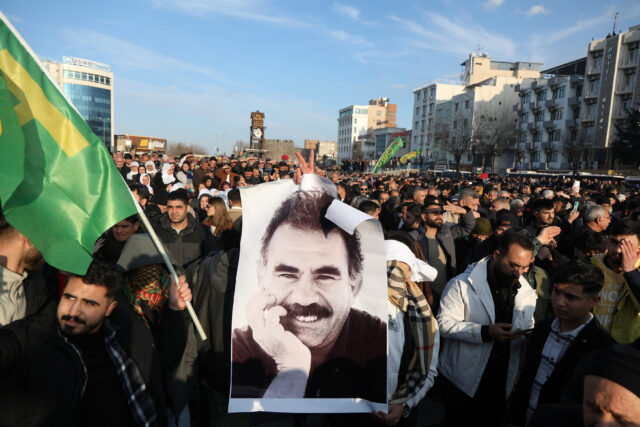
A demonstrator holds a picture of jailed Kurdish militant leader Abdullah Ocalan during a rally in Diyarbakir, Turkey, February 27, 2025. REUTERS/Sertac Kayar

Abdullah Öcalan, the long-imprisoned leader of the Kurdistan Workers’ Party (PKK), has made a historic appeal for his followers to lay down their arms and disband. This announcement could mark a major turning point in a conflict that has lasted four decades and resulted in approximately 40,000 deaths.

A Conflict Spanning Four Decades

The PKK, a militant Kurdish organization, has been engaged in armed resistance against the Turkish state since the 1980s, demanding greater autonomy and rights for Kurds. The group’s activities have extended across Turkey, Iraq, and Syria, significantly complicating diplomatic and military relations in the region.

The Significance of Öcalan’s Call

From his prison cell, where he has been held since his capture in 1999, the 75-year-old Öcalan issued a rare statement advocating for political dialogue over armed struggle. His call for disarmament underscores a shift toward a peaceful resolution, something that has eluded past negotiations. If acted upon, this could lead to a significant de-escalation of violence and an opportunity for Kurdish political movements to gain recognition through diplomatic means rather than armed conflict.

Turkey’s Response and Regional Implications

The Turkish government, under President Recep Tayyip Erdogan and his ally Devlet Bahceli, is weighing its response. Historically, Ankara has been skeptical of PKK peace overtures, labeling the group a terrorist organization and maintaining a hardline stance against its activities. However, if the PKK genuinely moves toward disarmament, Turkey could see an opportunity to stabilize its eastern regions and improve relations with neighboring Iraq and Syria, where Kurdish factions hold significant influence.

Challenges to Disarmament

Despite Öcalan’s call, skepticism remains about whether all factions within the PKK will comply. Some hardline elements may reject disarmament, fearing a loss of leverage in negotiations. Furthermore, Kurdish fighters in Syria and Iraq operate with different strategic objectives, making it uncertain how a ceasefire in Turkey would affect broader Kurdish militancy in the region.

A Path Forward?

For disarmament to succeed, Ankara and Kurdish political representatives would need to engage in meaningful negotiations addressing Kurdish rights, governance, and integration into Turkish society. Öcalan’s appeal provides an opening for peace, but the path forward will depend on trust-building measures, political will, and an acknowledgment of past grievances.

As the international community watches closely, Öcalan’s call may signal the beginning of the end of a decades-long conflict. However, whether peace can be achieved will depend on the actions taken in the coming months by both the Turkish government and the broader Kurdish movement.

Sources: WallStreetJournal, APNews, Reuters, FinancialTimes, NYTimes, Bloomberg.