


The UN Is Choosing Its Next Leader, and You Can Shape the Outcome
By Linda Argalgi Sadacka
A NEW SECRETARY-GENERAL TAKES OFFICE ON JANUARY 1. AMERICA HOLDS A VETO OVER THE CHOICE.
Every few years, the United Nations makes a decision that will shape how the world talks about Jews and Israel for a decade, and almost no one in our community notices until it is over. That decision is being made right now. António Guterres’s second term ends on December 31, and his successor will become the most powerful voice in international diplomacy, with enormous influence over what the world condemns, what it excuses and whose suffering it acknowledges.
That is why I started ONE STANDARD. Its core fits in a single sentence. The rules should not change depending on who the victim is. Not special treatment for Israel. Not a loyalty test. One standard, applied to everyone, including the Jewish people.
WHAT I SAW INSIDE
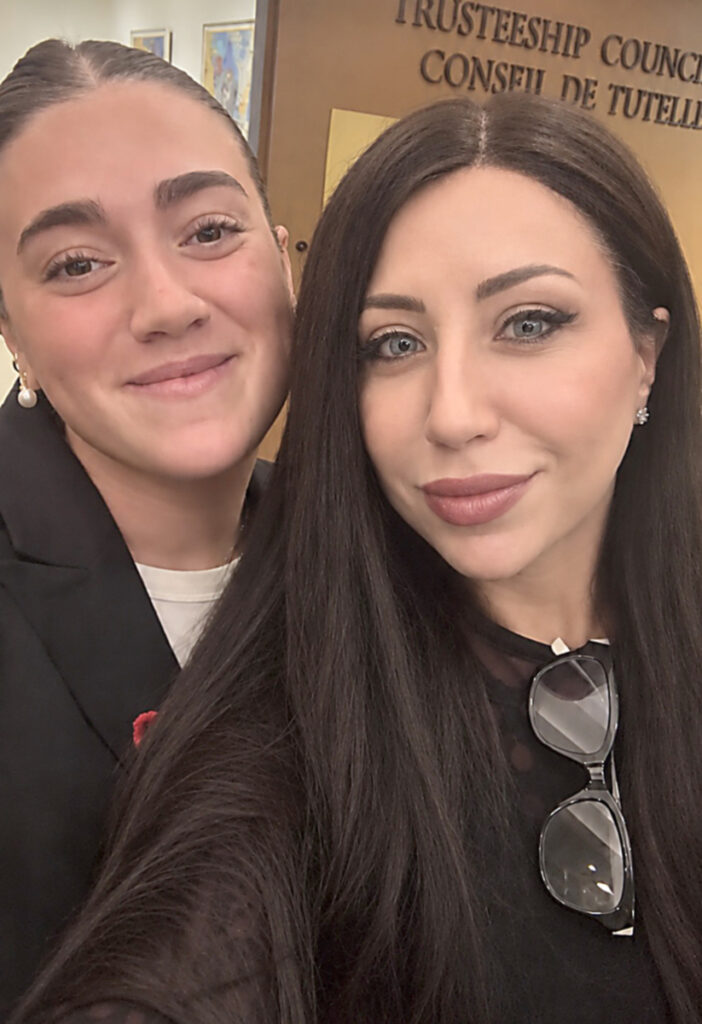
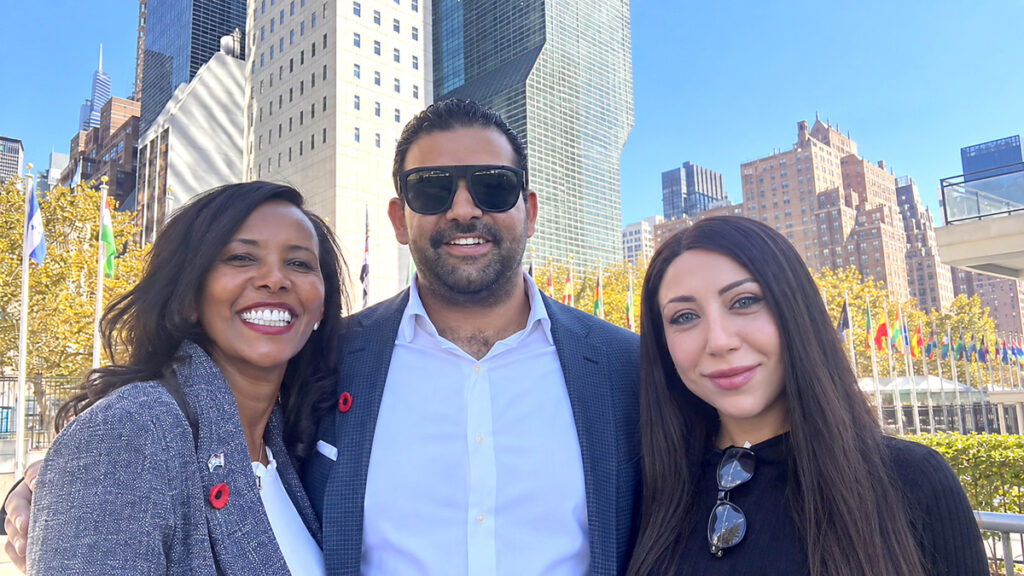
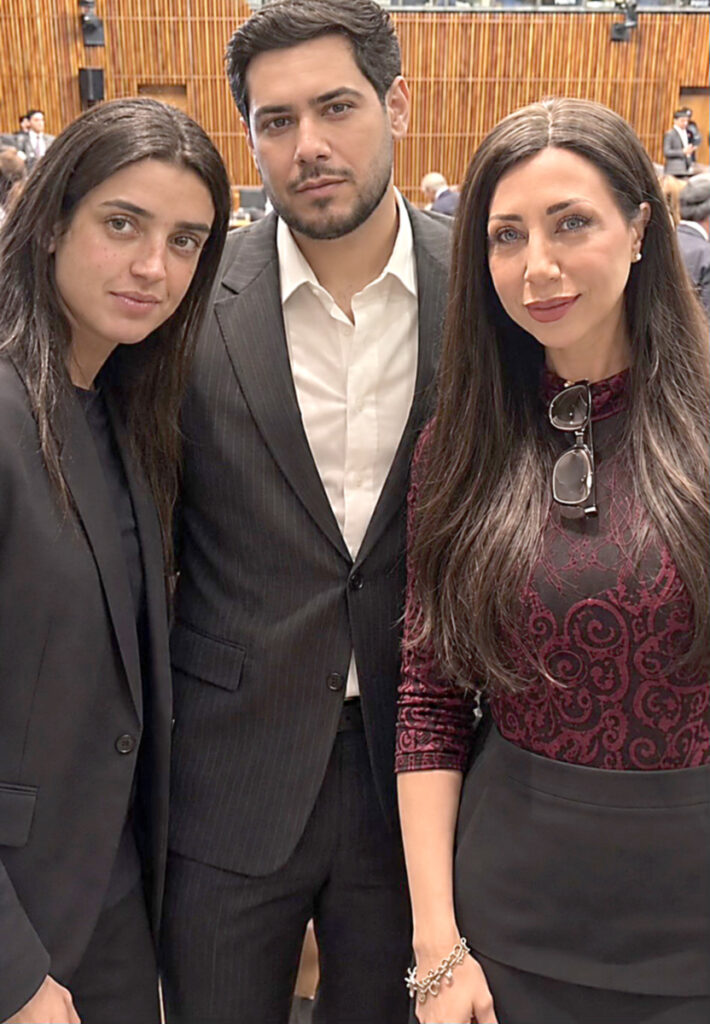
On October 6, the eve of the third anniversary of October 7, I sat in the United Nations with hundreds of diplomats and guests at a commemoration hosted by Israel’s Permanent Mission. Oriya Berlin, who was serving as an IDF lookout at the Re’im base on October 7, wept and kept speaking. Eliya Cohen described his 505 days in Hamas captivity, where he refused his captors’ attempts to use him in propaganda videos. Beside him sat Ziv Abud, the woman he believed had been killed in the shelter where they were torn apart, and who is now his wife. U.S. Ambassador Mike Waltz told the room, “October 7th can never, ever happen again, and it will not ever happen again. Certainly not under this president’s watch.”
Not everyone came to listen. The United States, Russia and the United Kingdom were represented. China and France, two of the five countries that hold a veto over the next Secretary-General, did not send anyone.
The Secretary-General was not there either. He was on an official visit to Pakistan. His anniversary message rightly called the attack abhorrent and declared that nothing can justify it. But his condemnations will always be remembered alongside the line he delivered weeks after the massacre, that it “did not happen in a vacuum.” The next SecretaryGeneral should never need a second statement to repair the first, and should be in the room next October.
Three days later, the Nobel Peace Prize went to Navi Pillay, who chaired the UN commission of inquiry that concluded Israel had committed genocide in Gaza. What the UN produces does not stay inside the UN. It gets cited, honored and taught, and it shapes what our children’s classmates believe about Jews.

WHY THE JOB MATTERS
The Secretary-General is not a figurehead. When a crisis breaks, the first words from the UN usually come from that office, and they frame the story for governments, newsrooms and campuses everywhere. The “vacuum” remark, made while more than 200 hostages were still held in Gaza, became a ready-made justification repeated around the world.
The office also carries real power. Under Article 99 of the UN Charter, the Secretary-General can bring any threat to international peace before the Security Council, and Guterres used that rarely invoked power over Gaza in December 2023. The office oversees the annual report on violations against children in armed conflict, which in 2024 listed Israel’s military for the first time, alongside Hamas. It also appoints the head of UNRWA, where the UN’s own investigators found that nine staff members may have been involved in the October 7 attack. My two grandsons were born this year. By the time they are old enough to learn what happened on October 7, the person chosen in these coming weeks may still be deciding how the world remembers it.
WHAT ONE STANDARD ASKS
ONE STANDARD asks every candidate, and the governments choosing among them, to commit to four principles.
• Hostage-taking is condemned in the same words, whoever the hostages are. No “context,” no pivot in the next sentence. • Antisemitism is named as clearly as every other hatred. • Every official speaking under the UN flag meets the same standard of evidence, whichever country they accuse, and is held accountable when claims prove false. • Every member state, including Israel, receives the same due process and institutional treatment. None of this requires agreeing with every Israeli policy. It requires consistency. A candidate who cannot commit to that should not lead the United Nations.
HOW THE CHOICE IS MADE
The 15 members of the Security Council decide through a series of secret straw polls, marking each candidate “encourage,” “discourage” or “no opinion.” To win the formal vote, a candidate needs at least nine votes in favor and no veto from any of the five permanent members. The United States, Russia, China, France and the United Kingdom. Confirmation by the General Assembly is then generally a formality.
In the fifth round, held on October 7 itself, Costa Rica’s Rebeca Grynspan led with nine “encourage” votes and six “discourage” votes. That is exactly enough to pass, with six unidentified objectors who could include a veto. As of this writing, no candidate has secured the Council’s backing.
Here is what almost no one in our community realizes. The United States holds one of those vetoes, and we are American citizens. I was born in Montreal. I chose this country, and I have never taken that citizenship for granted. It is not a souvenir. It is a voice, and right now that voice has a direct line to one of the five most powerful votes in the room.

THE CANDIDATES
Seven candidates remain, and Latin America is widely considered next in line. Israel’s ambassador, Danny Danon, has noted that not one has presented a detailed plan to combat institutional antisemitism at the UN. Here is my assessment, based on their public records.
Rebeca Grynspan (Costa Rica) Mixed. The frontrunner would be the first Jewish Secretary-General. She is the daughter of Holocaust refugees, and her niece and nephew served in the IDF. But biography is not a record. The UN agency she leads has published reports sharply critical of Israel, and critics have asked where her voice was when Guterres made the “vacuum” remark.
Rafael Grossi (Argentina) Mixed. As head of the UN’s nuclear watchdog, he has overseen reporting on Iran’s undeclared nuclear activities. Yet UN Watch argues he has at times been too cautious toward Iran and too critical of Israel.
Carolyn Rodrigues Birkett (Guyana) Poor. According to UN Watch, under her leadership Guyana supported every anti-Israel resolution at the General Assembly. Guyana has condemned the October 7 attack, but she has pressed the Security Council to demand that Israel withdraw to the pre-1967 lines.
María Fernanda Espinosa (Ecuador) Poor. According to UN Watch, she voted against condemning Iran’s repression while championing anti-Israel initiatives.
Ivonne A-Baki (Ecuador) No clear record. She has called for overhauling the Security Council’s permanentmember structure. Any change that weakens the American veto, which has repeatedly protected Israel from one-sided resolutions, deserves close scrutiny.
Macky Sall (Senegal) and Olara Otunnu (Uganda). No clear record on Israel or antisemitism.
Not one candidate has earned a strong rating, and the race is genuinely open. That is exactly why our voices matter now.
SIX THINGS YOU CAN DO THIS WEEK
1. Make three calls. Call both of your U.S. senators and your member of Congress. Say, “I’m a constituent calling about the next UN Secretary-General. I’m asking that the United States support only a candidate who commits to one standard. Condemning terrorism and hostage-taking in the same language regardless of the victims, and naming antisemitism as clearly as every other hatred.” A few calls are noise. Hundreds on one issue become a signal.
2. Write to the U.S. Mission to the United Nations, which casts America’s vote on the Security Council.
3. Read what the candidates said. Their vision statements and public sessions are online. Notice what they said about antisemitism and terrorism, and what they avoided.
4. Ask the questions in public. Post them, tag the candidates and the officials who will vote, and share.
5. Bring someone new. Ask your rabbi, and a local pastor, to raise it. When people outside our community ask why the rules change when the victims are Jews, the question carries a force our voices alone never will.
6. Keep watching after January 1. Note the new Secretary-General’s first statement on antisemitism, first appointments and first crisis.

OUR TURN
On October 6, survivors walked into the United Nations and told the truth without softening a word. They did their part. The rest falls to us, citizens with phones, voices and neighbors. The next leader of the United Nations should hear one message from the very first day, from every direction. One standard, for everyone, including us.Linda Argalgi Sadacka is a writer and strategist whose work explores Jewish life, culture, and public affairs. She is the founder of Shabbat 250, a grassroots initiative strengthening Jewish identity through the shared experience of Shabbat, and the host of The Silent Revolution podcast.


