



Ari Baum, CFP®
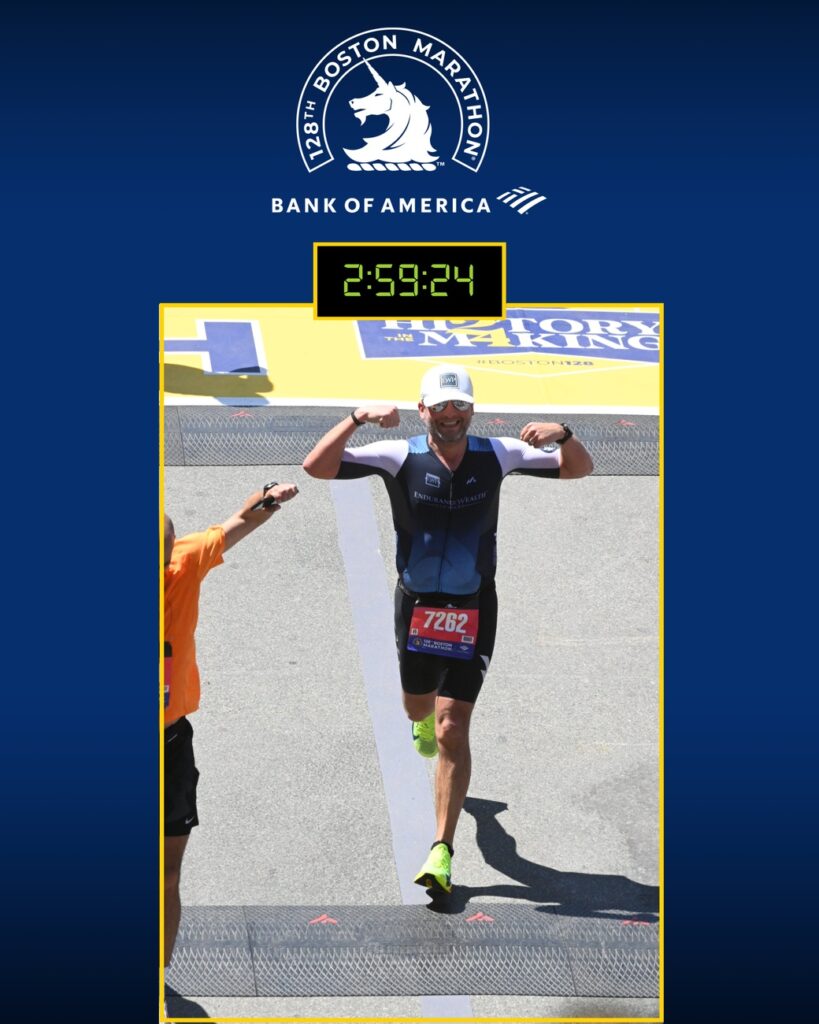
STANDING AT THE FINISH LINE OF A RACE, EVERYTHING FEELS CLEAR. THERE’S A CLOCK OVERHEAD, YOUR BODY IS EITHER SPENT OR TRIUMPHANT, AND THE RESULT REFLECTS MONTHS, SOMETIMES YEARS, OF PREPARATION. THERE ARE NO SHORTCUTS IN ENDURANCE SPORTS. YOU CAN’T FAKE YOUR WAY THROUGH A MARATHON OR AN IRONMAN. YOU EITHER DID THE WORK, OR YOU DIDN’T.
Investing works the same way. We often hear the phrase “investing is a marathon, not a sprint,” but in my experience, as both a financial advisor and an endurance athlete, that analogy is more than a cliché. It’s a framework for how people should think, behave, and ultimately succeed over time.

The Power of Consistency
One of the biggest challenges clients face is psychological. They look at a long-term goal, saving $2 million, $5 million, or more, and it feels overwhelming. The number is so large that it creates paralysis rather than action.
But the path to that outcome is far simpler than it appears. No one runs 26.2 miles at once. You run one mile at a time. The same is true financially. Wealth isn’t built in a single moment. It’s the result of disciplined, repeated actions over time. Saving consistently. Investing thoughtfully. Staying committed, even when progress feels slow. The people who succeed are not necessarily the ones who start with the most. They are the ones who stay in the race.
Preparing for Volatility
Every endurance athlete knows about “mile 20,” the point where fatigue sets in and doubt creeps in. This is where races are decided, not by physical ability alone, but by preparation and mindset. Markets have their own version of mile 20. We’ve seen it during moments like the 2008 financial crisis and the COVID-19 downturn, periods when uncertainty rises, headlines turn negative, and fear takes over. These moments are inevitable. The real question is not whether they will happen, but how you will respond when they do. A well-constructed financial plan is designed for these environments. It prepares you mentally and structurally so that volatility doesn’t lead to panic. Instead of reacting emotionally, you rely on a process that was built with uncertainty in mind.
The Cost of Emotional Decisions
When people are under stress, they tend to make poor financial decisions. It’s not a lack of intelligence, it’s human nature. In March 2020, many investors exited the market during the downturn, only to miss the recovery that followed shortly after. The issue wasn’t the market itself. It was the reaction to it. This is where guidance matters. A strong advisor doesn’t just build portfolios. They help clients navigate behavior. They ensure that risk levels align not only with financial goals, but with emotional tolerance. Because the best investment strategy in the world is useless if you can’t stick with it.
Filtering Out the Noise
Modern investors face a constant stream of information. Financial media focuses heavily on short-term movements, quarterly earnings, daily volatility, and predictions about what comes next. This creates the illusion that action is always required.
But consider this: What if your home had a ticker symbol, updating its value every day? One day it’s worth $1.2 million. The next, $900,000. Then back to $1.1 million. Would you sell? Of course not. Because you understand the purpose of your home. You live in it, you don’t trade it.
Investing should be approached the same way. When your time horizon spans decades, short-term fluctuations become far less meaningful. The challenge is not avoiding volatility, it’s avoiding the temptation to react to it.
Discipline Over Prediction
Both endurance sports and investing present the same temptation, chasing shortcuts. In racing, that might mean starting too fast. In investing, it might mean reacting to headlines or trying to time the market. But the outcomes are often the same, burnout, inconsistency, and missed opportunities. Long-term success comes from discipline, not prediction. It’s about committing to a process, trusting it through difficult periods, and staying focused on the finish line rather than the noise along the way.
Final Thought
Delayed gratification is not easy. It requires patience, trust, and the ability to stay focused when results are not immediate. But just as in endurance training, the payoff comes over time. The work you put in today may not show up tomorrow, but it will show up. And when it does, it reflects a simple truth: Success is not about reacting to every moment. It’s about staying committed to the process. Conceive. Believe. Achieve.
The content is developed from sources believed to provide accurate information. Investing involves risk including the potential loss of principal. No investment strategy can guarantee a profit or protect against loss in periods of declining values. Past performance does not guarantee future results. Consult with a financial professional regarding your specific situation.


