



A raw and unflinching firsthand account of 491 days in Hamas captivity
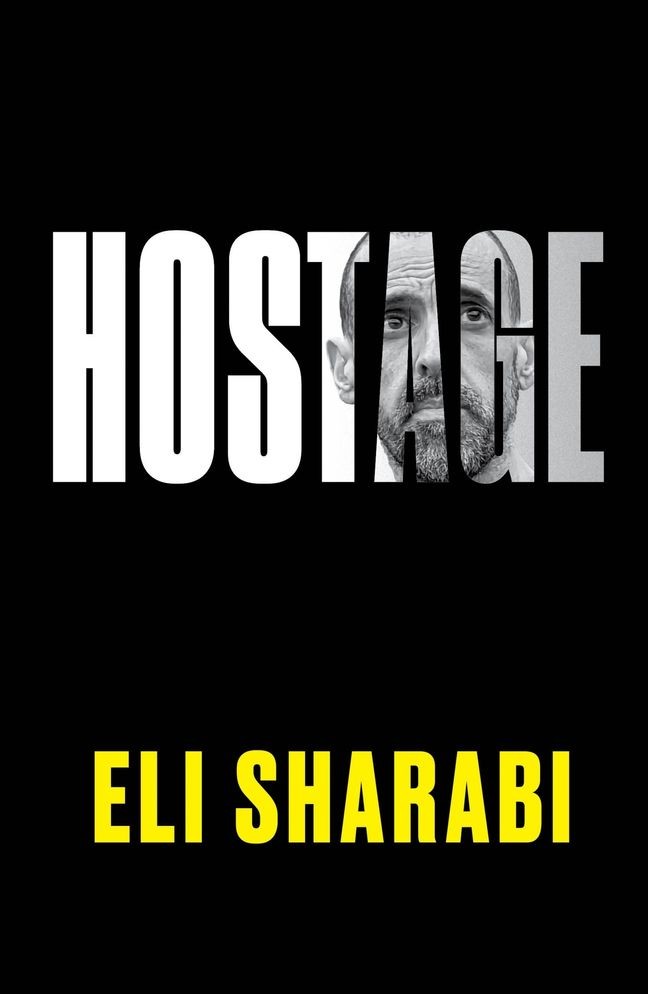
HOSTAGE by Eli Sharabi is a raw and unflinching firsthand account of his experience in Hamas captivity. In this first memoir by a released hostage (and the fastest-selling book in Israel’s history), Sharabi recounts the starvation, isolation, physical beatings, and psychological abuse he suffered at the hands of his captors.
On October 7, 2023, Hamas terrorists stormed Kibbutz Be’eri, shattering the peaceful life Eli Sharabi had built with his British wife, Lianne, and their teenage daughters, Noiya and Yahel. Dragged barefoot out his front door while his family watched in horror, Sharabi didn’t know it would be the last time he would see them.
In heart-pounding prose, Sharabi brings readers along as he is kidnapped into Gaza, first into the private homes of his captors and then into the suffocating darkness of Gaza’s tunnels where he and his fellow hostages endured the unimaginable.
Then, on February 8, 2025, after 491 days in captivity, the world watched as Sharabi emerged—a shadow of his former self. Weighing just 95 pounds, he was paraded in front of a rabid crowd in a macabre ceremony orchestrated by Hamas. Despite the horrors he endured, Sharabi held onto his unyielding resolve to survive and be reunited with his loved ones. But when he finally made his way home to Israel, Sharabi was devastated to learn that his wife and daughters were killed on October 7.

In HOSTAGE, Sharabi reveals:
• Details of where he was kept before being transported into the tunnels of Gaza
• How his fluency in Arabic allowed him to understand everything his captors were saying, revealing insight into their motivations, belief system, and the hierarchy inside Hamas
• The complicated relationships he and his fellow hostages developed with their various captors
• How his life experience as a father and manager gave him the tools to navigate complex human dynamics and allowed him to be a source of comfort to his fellow hostages
• The rituals he and his fellow hostages adopted to survive, including: a gratitude practice, the tools and routines they employed to stay as fit as possible, in mind and body and more
• The hunger and gruesome sanitary conditions within the tunnels
• How his Hamas captors were stockpiling boxes of UN aid, brimming with food. Meanwhile, Sharabi and his fellow captives subsisted on as little as one pita a day, at some points.
• The sophisticated and elaborate propaganda tools the terrorists employed: including choreographed video productions they forced the hostages to partake in, containing propaganda messaging
• The psychological torture, including calls to renounce their Judaism for Islam; misinformation about what was happening to their families and the war raging outside
• The agonizing lead-up to their release, including threats from the terrorists about what would happen if they went off script; the fears of being lynched by the frenzied and ecstatic crowds, and more
• What Sharabi said to the Red Cross representative when they were finally face to face, 491 days after his kidnapping
• How he was stunned by the number of people involved with the release process on Israel’s side, the level of planning, attention to detail and sensitivity
• His road to recovery
Eli Sharabi’s story is one of hunger and heartache, of physical pain, longing, loneliness and a helplessness that threatens to destroy the soul. But it is also a story of strength, of resilience, and of the human spirit’s refusal to surrender. It is about the camaraderie forged in captivity, the quiet power of faith, and one man’s unrelenting decision to choose life, time and time again. In the months since his release, Sharabi’s road to recovery has included the urgent mission to share his story and how he advocated for the release of the remaining hostages.
As Sharabi writes, “hope is never something that comes easily. It’s always something you’ve got to fight for, to work on.”


