



Teshuvah and the Stories We Tell About What We’ve Done
By Rabbi Meyer Laniado
ABRAHAM SHALOM YAHUDA WAS ONE OF THE GREAT JEWISH SCHOLARS OF THE MODERN ERA. HE WAS BORN IN JERUSALEM INTO A BAGHDADI RABBINIC FAMILY. HE STUDIED TALMUD IN HIS GRANDFATHER’S YESHIVA, MASTERED ARABIC AND NUMEROUS OTHER LANGUAGES, EARNED A DOCTORATE, AND BECAME A MAJOR SCHOLAR OF ANCIENT LANGUAGES AND INSCRIPTIONS, ESPECIALLY THE RELATIONSHIP BETWEEN THE TORAH AND ANCIENT EGYPTIAN LANGUAGE
I have spent a great deal of time studying his works because he represents a combination I deeply admire: someone thoroughly grounded in Torah and at the same time completely at home in archaeology, language, history, and academic scholarship.
In a 1944 article in The Jewish Quarterly Review, Yahuda tells an extraordinary story about a Christian Arab guide and antiquities dealer named Salim. The year was 1902, and Salim brought Yahuda news of what he called “a great secret,” a stone sarcophagus hidden near the Mount of Olives that he said he was certain belonged to one of the kings of Judah, perhaps even King David or Solomon.
Yahuda tells the story in dramatic detail. They rode by donkey, took detours so no one would follow them, broke through a wall, dug for hours, and finally uncovered the sarcophagus. The American consul, upon learning about the find, was prepared to buy it, but Yahuda insisted on time to study the inscription. He rushed to the library, compared it with ancient inscriptions, and, as Yahuda puts it, “the veil was removed from the entire mystery.” It was a forgery.

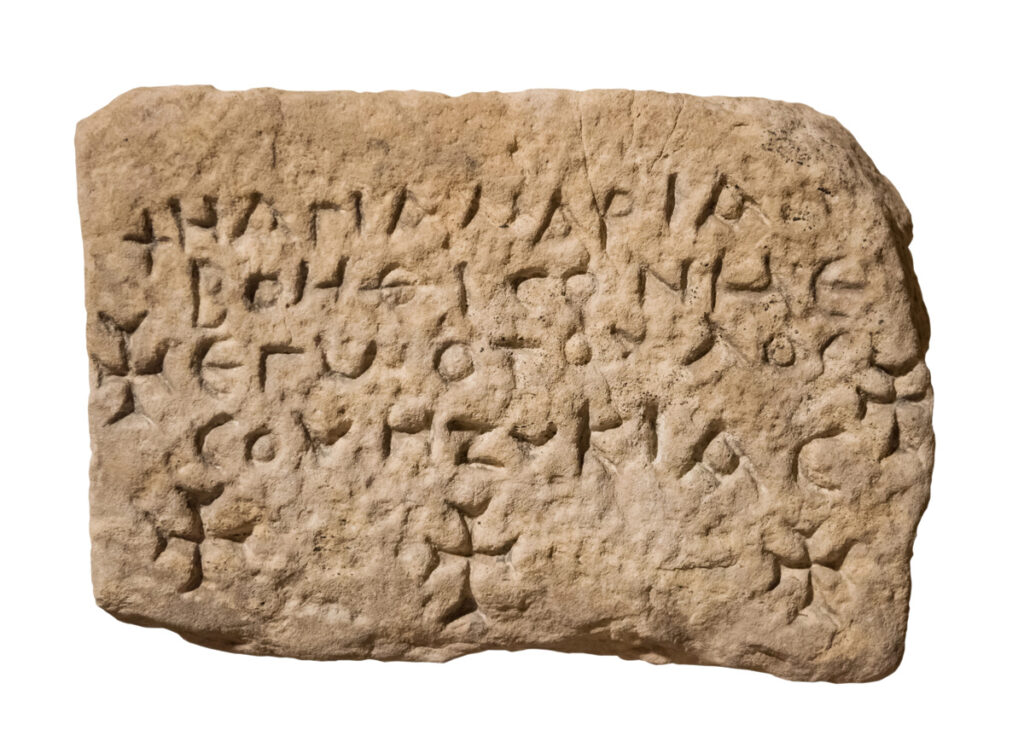
Salim affected innocence. They agreed to keep the matter quiet, and that seemed to be the end of the story. Then, several weeks later, Salim returned with genuine coins, jewelry, and antiquities, and Yahuda even found him legitimate work copying an ancient mosaic. Eventually, as Salim grew more comfortable with Yahuda, he began speaking about his past with what Yahuda calls “a surprising frankness.”
Salim described how he had helped prepare forged manuscripts, manufactured false antiquities, and the methods he had used to deceive European collectors and institutions. Reading this account, I initially thought. Maybe this is a story of teshuvah (repentance and return). He had begun honest work and was admitting to Yahuda what he had done. He even went so far as to say that he was happier with the little he earned honestly than with the large sums he once made through forgery. And at one point, he even asks G-D to forgive him.
But there was one line in Yahuda’s account that made me rethink the entire story. As Salim tells Yahuda that he is growing old and tired of a world of falsehood and wickedness, he describes that world as one in which “an honest man cannot earn his bread without making forgeries.” Only later does Salim admit that he himself had composed and engraved the inscription on the sarcophagus. He could acknowledge what he had done without giving up the explanation he had offered earlier. A dishonest world had left an honest man little choice. He was no longer disputing the facts. He was protecting what those facts meant about him.
I think we can recognize something of ourselves in this. We can admit what we did, and then, almost in the same breath, qualify it and begin explaining everything around it. I did it, but you have to understand.
That made me look differently at the introduction to the vidui (confession), in the Ana prayer that we recite on weekdays. Before we say Ashamnu, bagadnu, gazalnu (we have been guilty, we have betrayed, we have stolen), we recite.
She-ein anahnu azei panim u-keshei oref lomar lefanekha Hashem Elokenu ve-Elokei avotenu, tzaddikim anahnu ve-lo hatanu. Aval hatanu. We are not so brazen and stubborn as to stand before You and say that we are righteous and have not transgressed. But, indeed, we have transgressed.
Normally, when we tell the story of something we regret, the aval, the “but,” comes after the admission, Hatati, aval… (I transgressed, but…), and then comes the explanation, “You have to understand what happened.” In the vidui we recite daily, the aval does something very different. It does not qualify the admission, but rather leads us into the admission that we did transgress. There may be an entire story around what happened, context, pressures, circumstances, explanations. Some of those may be completely true. At the end, though, we must conclude. Aval hatanu, indeed, we have transgressed.
The Talmud in Yoma 87b calls aval anahnu hatanu the ikar vidui (the core of confession). I have to be able to say plainly. I did wrong. This part was mine. The rest of the story does not disappear. But I cannot use it to explain away my part or shift responsibility onto another person or the situation.

There is a beautiful example of this in the final words of Rabbi Ben-Zion Meir Hai Uziel, the Rishon LeZion (Sephardic Chief Rabbi of Israel). Rabbi Uziel had spent decades in public life. Much of his life and leadership was devoted to Torah and to trying to bring people together. Near the end of his life, he dictated a final testament, later published as Devarav HaAharonim (His Last Words). In it, he looks back at what he had tried to do with his life, and then turns to anyone he may have hurt, whether against the community or against an individual. He asks for their forgiveness and says, “Know and believe that I did not do this intentionally.”
Then comes his aval. Aval yakhol lihyot she-k’ven adam karutz me-homer… “But it is possible that, as a human being made of flesh…” He goes on to acknowledge that something may have escaped his mouth, or that he may have done something that harmed another person’s dignity or caused financial loss. And so he asks, Ana silhu li (Please forgive me). He does not pretend that his intentions are irrelevant. But he does not allow those intentions to erase the possibility that he caused harm or absolve him of responsibility.
Why is it so difficult to make that admission ourselves? Because admitting that I did something wrong can begin to feel like I am admitting something larger about myself. It is no longer only, I did that. It begins to feel like, that is who I am. And so I keep explaining. I keep defending the person I was, because if I stop defending him, it can feel as though I am condemning who I am. That may be the most interesting thing about Salim. He seems to have changed what he was doing before he changed the story he told about what he had done. He was earning his money honestly. He could admit that he had made the forgeries. But in the story he told about those years, he still needed to remain “an honest man.”
Teshuvah is not only asking. Am I still doing this? It also asks me to look back at what I did and ask. How do I tell that story now? Some of my explanations may really be true. The circumstances may have been complicated. The other person may really have done something wrong. My intentions may have been good. But after I have told the whole story, I still need to ask. What part of this was mine?
Maybe part of what allows me to stop defending the person I was is recognizing that I do not have to remain that person. I do not have to spend the rest of my life proving that what I did was really justified, or forced, or misunderstood. My taking responsibility for what I did does not mean that I am sentenced to remain the person who did it. I can still say. I did that. I should not have. I can own who I was without remaining who I was.
Rabbi Meyer Laniado is an associate rabbi at Congregation Kehilath Jeshurun and leads its Sephardic community on New York City’s Upper East Side. He teaches at Ramaz and is a growing voice in the broader conversation on Sephardic history, ideas, and culture, having shared perspectives at UJA, the Maimonides Fund, and the Bronfman Fellowship.


